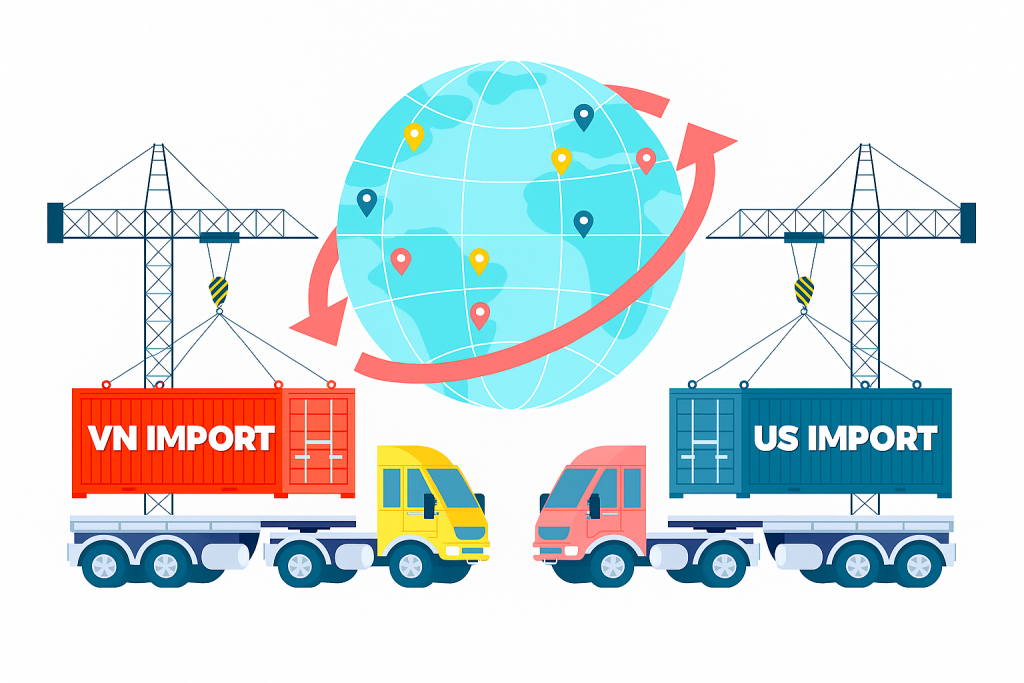
The trade deficit between Vietnam and the United States has persisted for many years, with tensions rising particularly during the Trump administration. As trade policy becomes a critical tool for shaping global supply chains, recent developments in Vietnam reciprocal tariffs are attracting growing attention from international investors and businesses.
Vietnam’s Strategic Moves to Improve Trade Relations
To address the imbalance and strengthen ties with the US, Vietnam has taken several steps
- Tariff Reductions on US Goods: As part of the agreement, Vietnam has decided to cut tariffs on a range of US exports, including liquefied natural gas (LNG) and automobiles. These tariff reductions signal Vietnam’s commitment to fairer trade practices and could help reduce the trade gap.
- Permitting Major US Investments: In addition, Vietnam allowed the Trump Organization to move forward with a $1.5 billion golf course and hotel project, reflecting its openness to American investment
- Welcoming Tech Giants: In a major step towards digital infrastructure collaboration, Starlink, owned by Elon Musk’s SpaceX, has received the green light to provide satellite internet services in Vietnam. Furthermore, this move not only enhances the country’s digital connectivity but also deepens tech cooperation between the two nations.
Vietnam Reciprocal Tariffs: A Balanced Approach
Currently, Vietnam reciprocal tariffs stand at approximately 10%—a level consistent with other countries. In contrast, China imposes tariffs exceeding 125% on some US goods. As a result, Vietnam reciprocal tariffs position the country as a more equitable trade partner—especially appealing to American policymakers and companies seeking to diversify their manufacturing outside of China.
Vietnam has been granted a 90-day window to negotiate new tariff terms with the US. These negotiations present a unique opportunity for Vietnam to:
- Strengthen its economic partnership with the US
- Reduce the trade deficit
- Reinforce its image as a reliable and low-risk alternative to China in the global supply chain
Why This Matters for Global Sourcing
As companies seek to de-risk supply chains and reduce reliance on China, Vietnam emerges as a key destination. With its lower reciprocal tariffs and improving trade relations with the US, Vietnam is becoming an increasingly attractive hub for sourcing and manufacturing.
Moreover, whether you’re a business owner, investor, or sourcing agent, tracking Vietnam reciprocal tariffs will be crucial soon. These policy shifts could reshape trade dynamics and open new doors for bilateral cooperation.
To know more or further support, please find us HERE