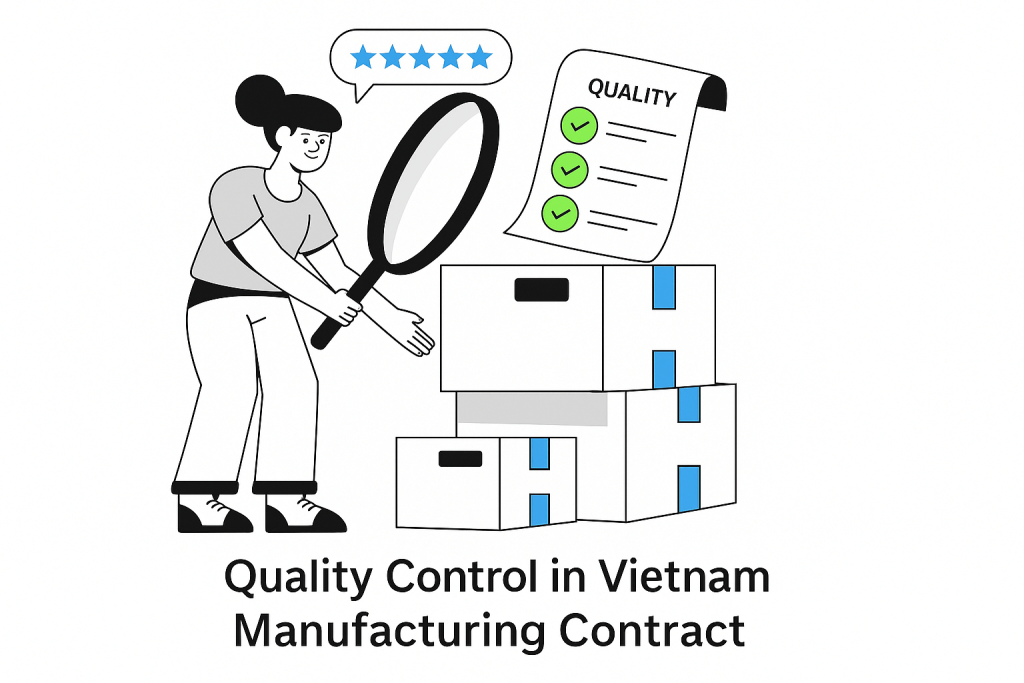
More global buyers are moving production to Vietnam. As this shift grows, strong quality control has become a key part of every Vietnam Manufacturing Contract. Vietnam offers good labor costs and a strong export base. However, without a clear QC plan, buyers may face risks such as unstable quality, high defects, late shipments, or costly rework. Because of this, it is important to understand how QC works in Vietnam, especially for golden samples, pilot runs, 4M control, CAPA, annual audits, and continuous improvement.
1. Golden Sample Approval: Setting the Quality Baseline
Before mass production starts, factories create two golden samples. One sample goes to the buyer. The factory keeps the other for comparison. Golden samples define details such as:
- Material and surface finish
- Dimensions and assembly steps
- Packaging and labeling
- Workmanship and cosmetic standards
If both sides do not align, quality issues may appear later. Therefore, every Vietnam Manufacturing Contract should explain how golden samples are stored, used, and controlled.
2. Pilot Production: Finding Quality Risks Early
A stable production flow often starts with a pilot run. This early batch, usually 20–200 units, helps confirm if the factory can meet the required quality. During the pilot run, QC teams review:
- Worker skills and training
- Machine condition and calibration
- Material stability between batches
- Production flow and process control
- Early defect types and capacity readiness
With these checks, buyers can detect risks early and avoid costly issues during mass production.
3. Quality Control in Vietnam: The Importance of 4M Control
Factories in Vietnam often rely on the 4M principle—Man, Machine, Material, and Method. Each factor affects quality. Even a small change may create defects. Because of this, a strong Vietnam Manufacturing Contract should require factories to document and report all 4M changes.
- Man: worker skills, training, turnover, shift communication
- Machine: equipment condition, tooling accuracy, calibration, maintenance
- Material: raw inputs, sub-supplier stability, packaging quality
- Method: SOPs, inspection steps, workflow, production instructions
When any 4M factor changes, quality risks may rise. Therefore, buyers should monitor these changes to avoid unexpected issues.
4. CAPA: Fixing and Preventing Quality Issues
Factories use CAPA when defects appear. This process helps fix the issue and prevent it from coming back. A complete CAPA includes:
- Finding the root cause
- Stopping the defect immediately
- Sorting or reworking affected goods
- Updating SOPs and retraining workers
- Improving machines or material checks
Strong CAPA reduces repeat issues and supports stable production.
5. Annual Supplier Audit: Protecting Long-Term Supply Stability
Annual audits help buyers check if the factory still meets the agreement under the Vietnam Manufacturing Contract. During these visits, buyers review:
- Capacity planning and any recent changes
- Workforce stability and training programs
- Factory management and new investments
- Document control and traceability
- Social responsibility and safety practices
These audits build trust, increase transparency, and help identify early risks that may affect future orders.
6. Continuous Improvement: Lower Defects and Better Cost Control
Continuous improvement should be part of every long-term buyer–factory partnership. It helps reduce defects and improve efficiency. Common improvement actions include:
- Reducing waste and scrap
- Upgrading planning and workflow
- Improving tooling and maintenance
- Reviewing past CAPA actions
- Training workers to reduce human errors
Over time, continuous improvement creates better value and supports stable long-term production.
Conclusion
A strong Vietnam Manufacturing Contract should include more than pricing and delivery terms. It must also include a clear quality control framework that protects buyers from production risks. When buyers align golden samples, run pilot production, monitor 4M changes, apply CAPA well, perform annual audits, and encourage continuous improvement, they can reduce defects, stabilize lead times, and build reliable partnerships with Vietnamese factories.
To know more or further support, please find us HERE