When sourcing from Asia, many buyers ask the same question.
Are you working with a real factory or just a trading company?
This question matters because choosing the wrong Vietnam trade partner can increase your product cost significantly. Moreover, it can create risks in quality, lead time, and long-term cooperation.
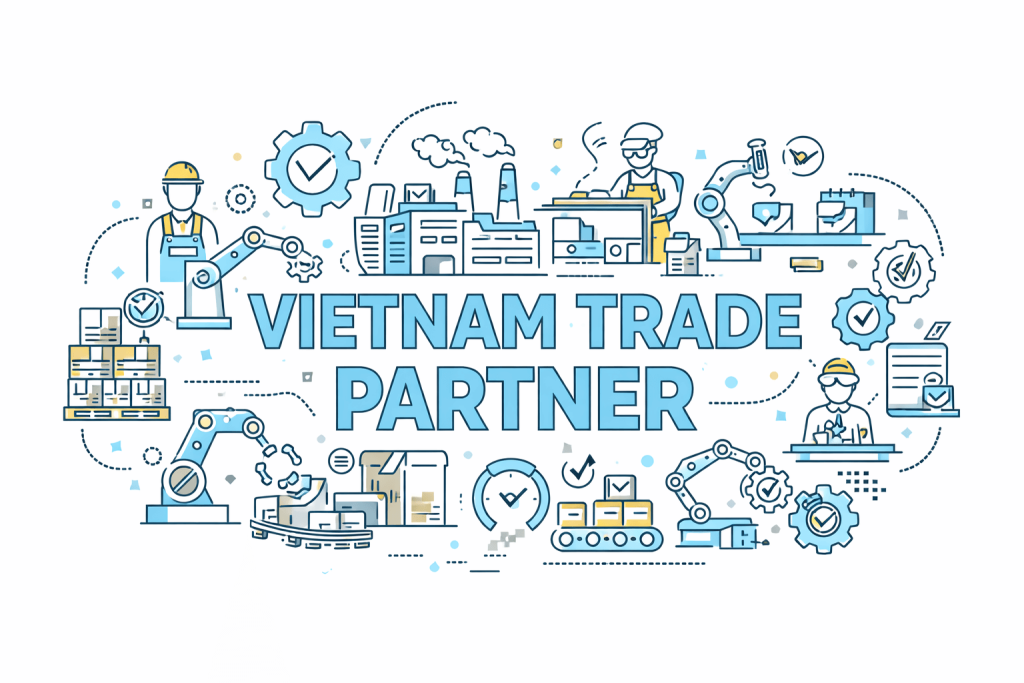
Why the Difference Between Trader and Manufacturer Matters
A manufacturer owns machines, workers, and production lines. Therefore, they control cost, quality, and production schedule.
A trader, however, often outsources production to third-party factories. As a result, the final price usually includes extra margins. In many cases, the selling price becomes much higher than the reasonable factory cost.
Even worse, some companies claim to be factories but outsource most products they do not produce or cannot price competitively.
Common Outsourcing Models You Should Know
First, some manufacturers outsource only non-core products. This happens when they lack machines or capacity.
Second, some companies outsource because their internal cost is not competitive. Therefore, they buy from cheaper factories outside.
Third, pure trading companies outsource everything. In this case, they never manufacture at all.
Because of these models, it is not easy to identify a true Vietnam trade partner without verification.
How Traders Increase Product Prices
Traders usually add multiple layers of markup.
For example, they add margin on product price, packaging, and even shipping cost.
As a result, buyers may pay 30 to 100 percent more than the real factory price. Therefore, price comparison without verification can be misleading.
How to Check If a Vietnam Trade Partner Is a Manufacturer
There are several practical ways to verify.
1. Use Local Network and Referrals
First, ask friends, industry contacts, or local sourcing experts. In many cases, local networks know who actually produces.
2. Verify Factory Capability
Next, check whether they own production machines, testing equipment, and skilled workers. Moreover, ask detailed technical questions about the process.
3. Check Global Trade Data
In addition, import and export data can reveal the truth.
If a company exports many product categories, they are likely a trader.
However, real manufacturers usually export a narrow product range.
4. Cross-Check Pricing and Shipping Cost
Finally, compare the quoted price with market benchmarks. If both product price and shipping cost are unusually high, that is a red flag.
Real Case: Identifying a Hidden Trader
One of our clients worked with a so-called factory in China. However, the quoted price was extremely high.
Therefore, the client asked us to double-check.
We verified product cost, raw material price, and shipping rates.
As a result, we found the real cost was nearly half of the quoted price. Eventually, it became clear that the supplier was a trading company, not a manufacturer.
Why Third-Party Verification Is Critical
Because traders often look professional, buyers cannot rely on websites or certificates alone.
That is why a third-party verification is important. It helps buyers confirm real factory capability, fair pricing, and supply chain transparency.
In conclusion, choosing the right Vietnam trade partner can save cost, reduce risk, and build a sustainable supply chain.
If you want to explore more about sourcing from Vietnam, you may find this guide helpful.