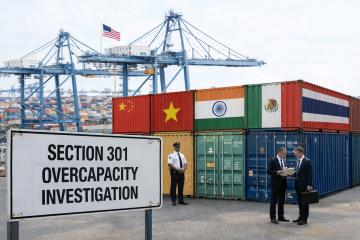
The United States has launched investigations into about 60 economies. The goal is to check whether these countries enforce bans on goods made with forced labor.
This move has raised concern across global supply chains. Many countries export large volumes of manufacturing goods to the US. Therefore, buyers want to know whether these supply chains follow labor rules.
Several major manufacturing countries are now under close review. These countries include China, Vietnam, Thailand, India, and Mexico.
Below is a quick overview of the key issues raised in each country.

China
China is the largest manufacturing exporter to the US. However, it also faces the strongest scrutiny.
The US government accuses China of operating forced labor programs. These programs allegedly involve Uyghur and other ethnic minorities in Xinjiang.
As a result, the Uyghur Forced Labor Prevention Act (UFLPA) blocks many imports linked to the region.
Key concerns include:
- cotton and textiles
- solar materials
- agricultural products
- manufacturing inputs
Because of this law, US customs may stop shipments if forced labor risks are suspected.
Consequently, global companies must carefully trace their supply chains when sourcing from China.
Vietnam
Vietnam plays a major role in global manufacturing supply chains. It exports large volumes of apparel, electronics, and agricultural goods.
However, the US is examining whether Vietnam fully enforces international labor standards.
In particular, American regulators worry about supply chain transshipment.
This means goods from high-risk regions could pass through Vietnam before entering the US market.
Key areas of attention include:
- garment manufacturing
- electronics assembly
- agricultural exports
Therefore, Vietnam must show strong monitoring systems in its supply chains.
US buyers also expect factories to pass social compliance audits.
Thailand
Thailand is another important manufacturing hub in Southeast Asia.
However, migrant labor has become a key concern.
Millions of workers from Myanmar currently work in Thailand. Because of conflict in Myanmar, many workers cross the border without clear documentation.
As a result, these workers may become vulnerable to labor abuse.
Common risks reported by international organizations include:
- recruitment debt from labor brokers
- confiscation of worker documents
- extremely long working hours
- low wages
These issues appear in industries such as:
- seafood processing
- fishing
- manufacturing
- construction
Therefore, US regulators want to know whether Thailand properly monitors labor conditions in these supply chains.
India
India is a major global manufacturing country. It exports textiles, handicrafts, and many industrial goods.
However, several labor issues remain under international review.
Child labor and vulnerable workers
Reports collected by US authorities suggest that child labor still exists in certain industries.
These industries include:
- carpet weaving
- garment production
- brick manufacturing
- handicrafts
In addition, women from vulnerable communities sometimes work under poor conditions.
They often receive low pay and limited legal protection.
Caste and bonded labor
India also faces concerns about bonded labor.
In some cases, workers borrow money from employers. Afterward, they must work to repay the debt.
However, high interest rates make it difficult to escape the cycle.
Because of this system, some workers become trapped in long-term labor dependency.
Therefore, US regulators closely monitor these risks within supply chains.
Mexico
Mexico has a unique position because of the USMCA trade agreement.
Under this agreement, labor standards play a major role in trade enforcement.
Therefore, the US wants to confirm that forced labor goods do not enter North America through Mexico.
In particular, investigators want to know whether:
- foreign goods enter Mexican factories
- forced labor inputs appear in supply chains
- products receive USMCA tariff benefits before entering the US
Because Mexico exports large volumes of manufacturing goods, these checks are especially important.
Social Compliance Audits Used by US Buyers
Today, American companies apply strict ESG standards across their supply chains.
They want to avoid legal risk. In addition, they want to protect brand reputation.
Therefore, buyers often require factories to pass social compliance audits.
Common audit systems include:
- SMETA
- BSCI
- SA8000
- RBA
These audits check labor conditions such as:
- forced labor
- child labor
- worker safety
- wages and working hours
- recruitment practices
As a result, factories must meet these standards before supplying international buyers.
Conclusion
The US forced labor investigation signals a major shift in global supply chain oversight.
Large manufacturing countries such as China, Vietnam, Thailand, India, and Mexico now face closer scrutiny.
However, this investigation does not target trade alone. Instead, it focuses on labor conditions behind global production.
Therefore, manufacturers must strengthen transparency across their supply chains.
At the same time, US buyers will likely increase social compliance checks in the coming years.
You maybe interested in Trump Tariffs Supply Chain Strategy: Why US Buyers Are Sourcing Outside China or The End of Cheap Manufacturing? Why Supply Chains Are Being Reshaped by Global Instability