Introduction: Why Compliance Is the New Competitive Advantage
For many years, global buyers focused on cost. However, after August 2025, compliance will matter more than price.
US Customs and Border Protection (CBP) is entering a new enforcement phase. As a result, CBP is targeting tariff evasion, origin fraud, and shell importers.
For buyers manufacturing from Vietnam, supplier selection is no longer only about price or capacity. Instead, it is about legal survivability. If buyers choose the wrong factory today, the risk will appear later at the US border.
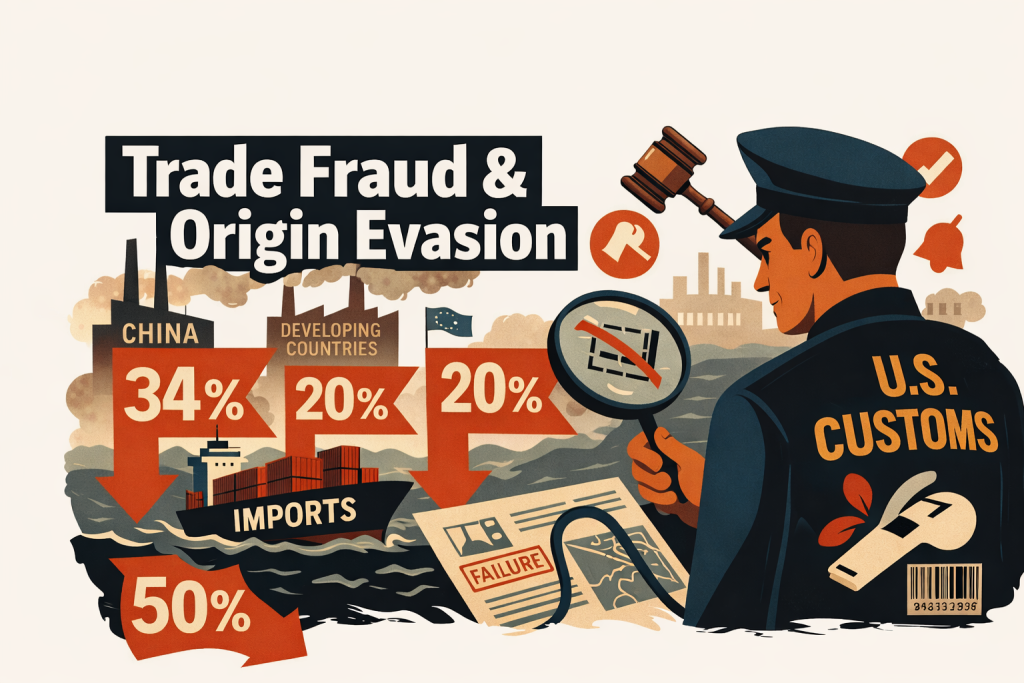
Common Trade Fraud Risks Buyers Must Understand
Many violations follow the same patterns. Therefore, buyers must understand them clearly.
The most common risks include:
- Origin fraud and transshipment
- Tariff fraud through incorrect HS codes
- Under-declared product value to reduce duties
- Use of shell companies or non-resident importers for US entry
After August 2025, these practices face a higher risk of whistleblower reports to CBP. As a result, enforcement actions will increase.
Manufacturing From Vietnam: A Fork in the Road
The Vietnam manufacturing hub is now splitting into two clear groups.
❌ Short-Term Price Competitors
Some factories still compete only on price. As a result, they often take shortcuts.
These suppliers may:
- Cut corners on origin documentation
- Promise tariff avoidance
- Rely on shell or non-resident importers
They may look competitive today. However, they push long-term legal risk directly to the buyer.
✅ Compliance-Driven Vietnamese Manufacturers (The Long Game)
In contrast, leading factories are moving in the opposite direction. They focus on compliance first, even when it increases cost.
These suppliers usually provide:
- Clear country-of-origin documentation
- Localized production processes inside Vietnam
- Correct HS classification and true customs value
- Buyer-controlled Importer of Record
- Full audit cooperation
Although they may lose short-term price battles, they win long-term trust. As a result, they secure repeat orders and stable partnerships.
How Global Buyers Should Rethink Supplier Selection in the Vietnam Manufacturing Hub
Buyers need a different evaluation mindset. Therefore, compliance must become a core requirement.
Before choosing a factory, buyers should ask:
- Can the factory support origin verification audits?
- Is most of the production process truly based in Vietnam?
- Does the buyer fully understand the product’s tariff exposure?
- Can the buyer control import instead of using DDP?
- Does the factory have shipment history linked to shell or non-resident companies?
If a supplier cannot answer these questions clearly, the risk is not theoretical. Instead, it is structural.
Conclusion: Compliance Is Not a Cost — It Is a Strategy
The era of “creative logistics” is ending. Meanwhile, CBP enforcement is becoming stricter and faster.
The Vietnam manufacturing hub remains a strong sourcing strategy. However, it only works when built on compliance, transparency, and long-term thinking.
Buyers who choose compliant partners today may lose small cost advantages. However, they gain continuity, scalability, and legal certainty.
In the next enforcement cycle, those advantages will matter most.
You maybe interested in Vietnam Transshipping: What Global Buyers Should Know or Made in Vietnam Label and Vietnam CO – Country of Origin Issue