Many people believe the main goal of Trump tariffs was to reduce the US trade deficit. However, the real objective goes deeper than trade numbers.
In reality, tariffs became a tool to reshape global supply chains. Therefore, companies around the world started to rethink their sourcing strategy.
Today, buyers focus on supply chain stability. As a result, sourcing decisions now consider risk, diversification, and long-term planning.
Trade Deficit Was Only the Surface
The US trade deficit, especially with China, often appears in political discussions. However, this issue was only the visible part of the policy.
The deeper objective focused on protecting domestic manufacturing. At the same time, tariffs helped create pressure during trade negotiations.
In practice, tariffs supported several strategic goals:
- Protect US manufacturing industries
- Encourage production in North America
- Increase leverage in trade negotiations
- Reduce long-term dependence on Chinese manufacturing
Therefore, tariffs were not only about trade numbers. Instead, they became a political and economic strategy.
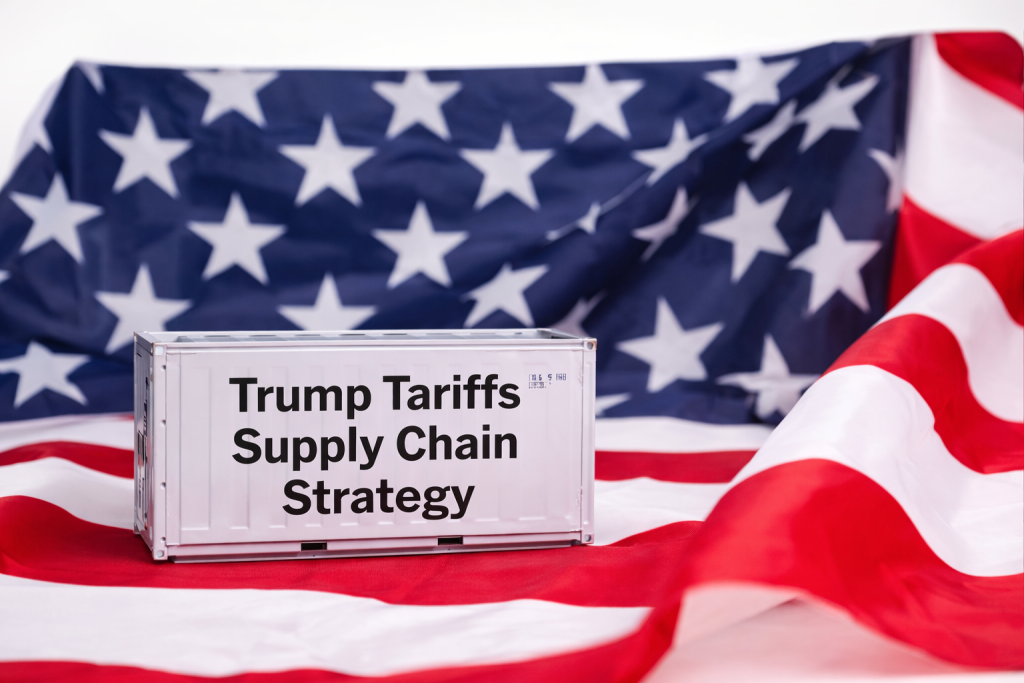
Trump Tariffs Supply Chain Strategy and China Plus One
At the same time, tariffs pushed US importers to diversify their supply chains. As a result, many companies began looking for suppliers outside China. This movement later became known as the China Plus One strategy.
Under this approach, companies still work with Chinese suppliers. However, they also build additional production capacity in other countries.
Therefore, businesses reduce supply chain risk. In addition, companies avoid relying on a single country for manufacturing.
Why Companies Diversify Supply Chains
Today, buyers evaluate sourcing decisions more carefully. First, companies want stable production capacity. Second, they want to reduce geopolitical risk. Because of this, many companies diversify their supply chains.
Common sourcing strategies now include:
- Multi-country supplier networks
- Secondary suppliers outside China
- Regional manufacturing hubs
- Flexible production capacity
As a result, supply chains become more resilient. In addition, companies reduce the risk of disruptions.
Opportunities for Southeast Asia Manufacturing
This supply chain shift creates opportunities for Southeast Asia. In particular, Vietnam and Thailand attract many international buyers. These countries offer competitive labor costs and growing manufacturing capacity.
In addition, governments support foreign investment in manufacturing. Therefore, many global brands are expanding sourcing activities in the region.
For example, Vietnam has become a key destination for apparel, furniture, and consumer goods manufacturing.
Tariffs Are Temporary but Supply Chain Strategy Is Long Term
Tariffs may change over time. However, supply chain strategy focuses on long-term stability. Because of this, businesses do not rely only on tariff policies. Instead, companies develop structured sourcing strategies.
These strategies often include:
- Multiple supplier countries
- Backup production capacity
- Long-term supplier partnerships
- Transparent cost structures
As a result, companies build more stable supply chains.
Why Sourcing from Vietnam Becomes Important
Vietnam is now an important part of global supply chains. Many US companies work with Vietnamese factories to support China Plus One strategies. At the same time, Vietnam continues to develop its manufacturing ecosystem. Because of this, the country attracts more sourcing projects each year. Therefore, Vietnam will likely remain a key supply chain hub in Asia.
Conclusion
Trump tariffs changed how companies think about global supply chains. Although tariffs focus on trade deficits, their real impact is supply chain diversification. As a result, many US companies now follow China Plus One sourcing strategies.
Therefore, Southeast Asia countries such as Vietnam benefit from this shift. For businesses, the key lesson is clear. A strong sourcing strategy must focus on diversification, stability, and long-term supply chain resilience.
You maybe interested in The End of Cheap Manufacturing? Why Supply Chains Are Being Reshaped by Global Instability