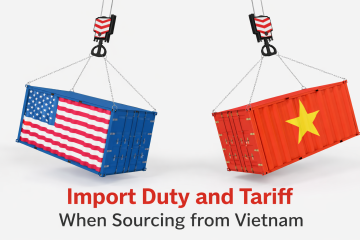
What Is a Vietnam CO Form?
A Vietnam CO Form is a Certificate of Origin issued by authorized Vietnamese agencies.
It confirms that goods originate from Vietnam. Therefore, US buyers use this document to support customs clearance, compliance reviews, and origin verification.
In addition, a Vietnam CO Form helps buyers:
- Prove Vietnam origin clearly
- Reduce origin-related risks
- Prepare for customs audits
- Avoid China-origin tariff exposure
As a result, this document plays an important role in Vietnam–US trade.
Common Vietnam CO Form Types
Vietnam issues several CO forms. However, not all of them apply to the US market.
In practice, US buyers focus on only one or two types.
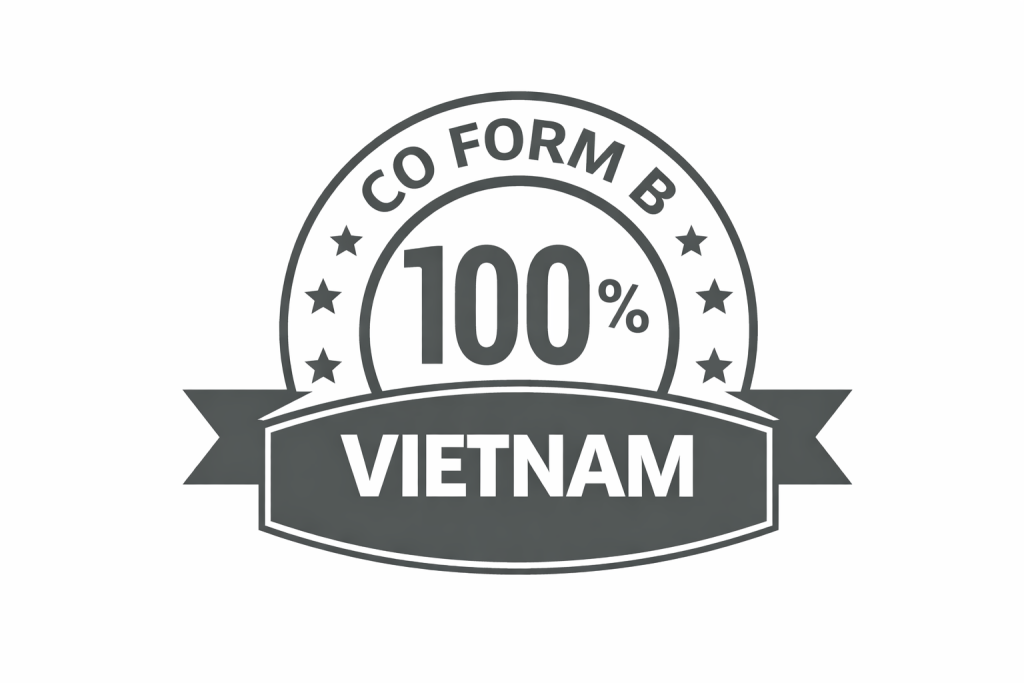
C/O Form B – The Most Common Vietnam CO Form for US Buyers
C/O Form B is the most commonly requested Vietnam CO Form by US buyers.
Key features of C/O Form B include:
- Non-preferential Certificate of Origin
- Issued under WTO rules
- Used to confirm origin rather than reduce import duties
- Accepted for most products shipped to the US
Why do US buyers prefer C/O Form B?
First, the US does not have a free trade agreement with Vietnam. Therefore, buyers do not need a preferential CO.
Second, buyers must prove that goods truly originate from Vietnam. As a result, Form B becomes the safest option.
In addition, this form helps buyers reduce risks related to Section 301 tariffs and anti-circumvention reviews.
In short, C/O Form B works as the standard Vietnam CO Form for the US market.
C/O Form A – Previously Common, Now Rarely Used for the US
C/O Form A supports preferential tariffs under the GSP program.
In the past, exporters used Form A widely. However, the situation has changed.
Key points about C/O Form A:
- Designed for GSP-eligible countries
- Allows reduced or zero import duties
- No longer applicable to Vietnam–US trade
Because Vietnam does not qualify for US GSP, exporters rarely use C/O Form A today.
As a result, US Customs does not request this form for Vietnam-origin goods.
What Is GSP?
GSP (Generalized System of Preferences) is a unilateral US trade program.
It offers tariff benefits to developing and least-developed countries.
The program aims to:
- Support economic growth
- Encourage exports from lower-income countries
- Provide duty-free or low-duty access to the US market
However, the US controls GSP eligibility and can remove countries at any time.
Southeast Asian Countries That Still Benefit From US GSP
In Southeast Asia, only a few countries still receive US GSP benefits.
For example:
- Cambodia
- Laos
- Myanmar (subject to political conditions)
Goods from these countries may enter the US with very low or zero duties, if they meet GSP origin rules.
In contrast:
- Vietnam and Thailand no longer qualify for GSP
- Therefore, Vietnam CO Forms focus on origin verification, not tariff reduction
Conclusion: Which Vietnam CO Form Should US Buyers Use?
For sourcing from Vietnam:
- C/O Form B ✔ remains the most suitable and most requested option
- C/O Form A ✖ no longer applies to Vietnam–US trade
Ultimately, a Vietnam CO Form helps US buyers confirm origin, manage compliance, and reduce sourcing risks.
Therefore, understanding the correct CO form prevents customs delays and costly mistakes.
If you need help verifying whether a Vietnamese factory can issue a valid C/O Form B, feel free to reach out.
You maybe interested in: Made in Vietnam Label and Vietnam CO – Country of Origin Issue