Vietnam research and development has become an important factor for global buyers. Many brands now want factories that can do more than mass production. They need partners who can support product development, engineering, and fast iteration.
However, many factories claim they have strong R&D teams. In reality, not all of them can prove it. Therefore, buyers need a clear and structured way to test R&D capability before scaling new products.
This article explains a simple and practical process to evaluate Vietnam research and development capability at the factory level.
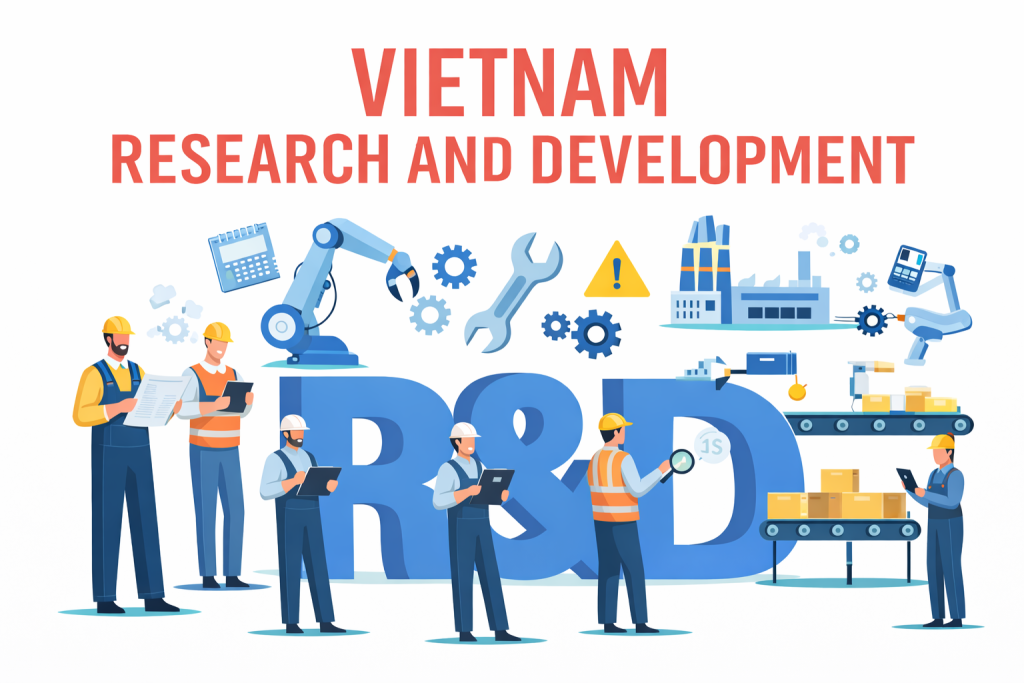
Why Vietnam Research and Development Matters in Sourcing
Vietnam is no longer only a low-cost manufacturing base. Today, buyers expect factories to support development work. As a result, R&D speed and quality directly affect time to market.
If a factory has strong R&D:
- New products launch faster
- Design risks drop early
- Engineering issues get solved sooner
If R&D is weak, delays often happen. Moreover, costs usually increase later. Therefore, early verification is critical.
Step I: Select Products to Test R&D Capability
First, select one or two products that already exist in the market. These products should match your target material, function, and design. You can choose products that you are already selling. Alternatively, you can select a trending product that is performing well in the market. This makes evaluation more realistic and closer to real business conditions.
You should not start with a brand-new concept. Instead, choose proven products. This approach reduces uncertainty. At the same time, it makes R&D evaluation clearer.
Then, ask the factory to study these products, not just quote them.
Step II: Ask the Factory to Study the Product and Create 3D Files by Themselves
This step helps you test how factories analyze real products. After receiving the sample, the factory should study the product before any development work.
Specifically, the factory should:
- Take measurements from the sample
- Study material behavior and performance
- Review product structure and assembly
Next, ask the factory to create 3D drawings based on the sample. Do not share your own 3D files at this stage. This step is critical for Vietnam research and development evaluation. When the factory builds 3D files independently, you can clearly see:
- How fast the R&D team responds
- How accurate the 3D structure is
- How well they understand product function and design
You could share 3D files directly. However, this would hide the factory’s true R&D capability. Therefore, asking them to generate 3D files on their own gives real insight into their development efficiency and engineering thinking.
How to Evaluate Factory Engineering and Product Development Capability
1. Review Tooling Quotes and Technical Feedback
After that, ask the factory to provide tooling quotes together with technical feedback. A strong R&D team will not only send prices. Instead, they explain their technical thinking clearly.
In this step, you should look for:
- Explanation of design risks, mold structure, material concerns, and production limits
- The quality of questions they ask about usage, performance, and tolerance
Moreover, smart questions usually lead to deeper and more productive discussions. If the factory only sends a price, R&D involvement is likely weak.
2. Request 3D Files, Technical Drawings, and Prototypes
Next, move to sampling and prototyping. Ask the factory to provide core development outputs, not just samples.
This step helps you evaluate:
- How well they translate design intent into 3D files and drawings
- How fast they can turn ideas into physical prototype samples
In addition, prototype quality often reflects internal coordination between R&D, engineering, and production teams.
3. Check Engineering Analysis and Process Thinking
During development, strong Vietnam research and development teams usually provide basic engineering analysis. This shows how they think, not just what they produce.
Depending on the product, this may include:
- Plastic flow or metal structure review
- Advice on surface finishing, coating, or treatment options
Even simple explanations are useful. Therefore, logical thinking and clear reasoning matter more than complex technical terms.
4. Evaluate Facilities, Machines, and Testing Capability
Then, review the factory’s internal facilities and development setup. This step shows whether R&D work is supported by real infrastructure.
You should verify:
- Development machines, pilot equipment, and in-house testing capability
- Whether product validation is done internally or fully outsourced
Testing is a critical step in product development. Experienced factories use testing to evaluate product risks and safety performance before market launch. If this step is skipped, future product risks can be very high. As a result, quality issues often appear after mass production starts.
Factories with real R&D usually invest in testing. Therefore, they rely less on trial and error and can reduce long-term product risk significantly.
5. Review BOM List and Project Management Style
Finally, ask the factory to prepare a BOM (Bill of Materials). This step clearly shows how professional the factory is.
A strong BOM usually includes:
- Clear material breakdown, cost structure, and version control
- Documented changes and update history during development
Moreover, how they manage BOM updates reflects their project discipline. Therefore, this step is critical for long-term product development and scaling.
Conclusion
Vietnam research and development should be tested, not assumed. Marketing claims alone are not enough.
By asking factories to build 3D files, analyze samples, develop prototypes, and manage BOMs, you can see their real capability. Moreover, this process shows how fast and professional their teams are.
In the end, strong R&D factories help you move faster, reduce risk, and grow product lines with confidence.
You may be interested Product Development Tips in Vietnam