Vietnam has become a major sourcing destination for global buyers. At the same time, Vietnam transshipping has turned into a growing risk.
As trade pressure increases, buyers must understand this topic clearly. Otherwise, sourcing decisions may create long-term business problems.
This article explains Vietnam transshipping in simple terms. It also explains why US buyers should be more careful today.
What Is Transshipping?
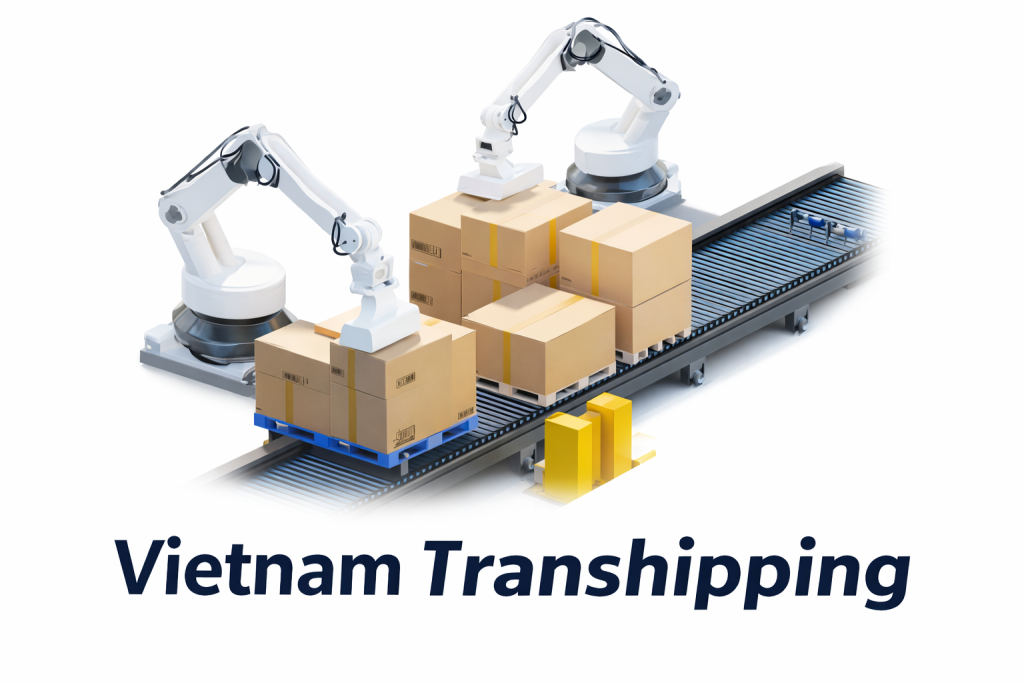
In simple terms, transshipping means goods are shipped through one country while they mainly come from another country.
In many cases, products are:
- lightly assembled
- repackaged
- relabeled
However, real manufacturing does not happen in the exporting country. As a result, the declared origin does not reflect the true origin. Because of this, transshipping is often linked to tariff avoidance.
Vietnam Transshipping and Certificates of Origin (CO)
Vietnam transshipping is closely related to Certificates of Origin (CO) issued by Vietnam. These certificates confirm that goods are made in Vietnam. However, a CO is valid only when real value is added locally.
In recent years, Vietnam has attracted many FDI factories. Importantly, Chinese companies own many of these factories. Many of these factories moved to Vietnam after US tariffs on China. Their goal was cost reduction, not long-term production.
As a result:
- Vietnam value-added is very low
- Production is often limited to assembly or packaging
- Core materials still come from China
This situation creates high transshipping risk for buyers.
Vietnam Transshipping After the 2025 US Tariff Decision
In July 2025, Donald Trump imposed new tariffs on Vietnam goods. The agreement includes:
- 20% US tariff on Vietnamese goods
- 40% tariff on transshipping goods
This decision directly targets transshipping behavior. Because of this, many factories in Vietnam now face uncertainty. Some of them treat Vietnam as a temporary base only. Once tariffs are removed, production may move back to China. Therefore, these operations are not sustainable.
For buyers, this creates serious business risk:
- unstable suppliers
- short-term production plans
- compliance exposure
Vietnam Tightens CO and “Made in Vietnam” Controls
Under pressure from the US, Vietnam has tightened origin rules.
Today:
- Vietnamese authorities review CO applications more carefully
- “Made in Vietnam” labels are strictly controlled
- Authorities check value-added content more deeply
Vietnam now focuses on protecting its trade reputation. As a result, weak or fake origin claims are rejected more often. This change affects buyers directly.
Why Vietnam Transshipping Is a Major Risk for US Buyers
If a US buyer sources from a factory involved in transshipping, the risk is high.
Once flagged:
- Regulators may review the buyer’s supply chain
- future shipments face more inspections
- customs clearance becomes slower and complex
In many cases, the US Department of Commerce and US Customs will monitor shipments more closely. Even if buyers act in good faith, audits may still happen. Therefore, supplier choice is now a strategic decision, not just a cost decision.
Case Study: Turning Transshipping Risk Into Business Opportunity
We handled a transshipping-related case with one of our clients. First, we provided supplier verification services. Through this process, we were able to:
- track shipment history
- identify material sources
- review production flows
As a result, we clearly understood the factory’s real capability. With this information, our client:
- filtered out high-risk suppliers
- selected factories with real Vietnam value-added
More importantly, our client used this insight to advise their own customers. They helped customers:
- assess sourcing risk
- make safer supplier decisions
Because of this:
- trust increased
- credibility improved
- Customers assigned them more critical orders.
Risk control became a competitive advantage, not a cost.
What Global Buyers Should Do Next
To reduce Vietnam transshipping risk, buyers should:
- verify suppliers before ordering
- review material origin clearly
- check real production steps
- track shipment and export history
- avoid suppliers with only assembly activities
Most importantly, buyers should think long term. Cheap pricing is not valuable if compliance fails.
Conclusion: Vietnam Transshipping Is a Buyer Issue
Vietnam remains a strong sourcing destination. However, Vietnam transshipping is now under strict scrutiny.
For global buyers, especially US buyers:
- compliance risk is real
- supplier transparency matters
- due diligence is no longer optional
Buyers who act early will protect their supply chains. They will also gain trust and long-term business stability.
You might find this useful: Vietnam CO Form: Common Certificate of Origin Types and What US Buyers Usually Request