Introduction
For many years, China has been known as “the factory of the world.” As a result, many buyers believe it is impossible to compete with China on price. Some even say competing with China is unrealistic without strong government support.
However, this way of thinking is incomplete. Because of rising risks, buyers now need a broader view. That is exactly why the China Plus One Strategy has become essential in supply chain planning.
Why “Competing With China” Is the Wrong Starting Point
China benefits from several structural advantages. For example, it has strong government support. In addition, it has deep supplier ecosystems. Moreover, infrastructure is world-class. Most importantly, China operates at massive scale.
Because of these factors, trying to replace China or compete only on cost is a poor strategy. In reality, cost is only one variable.
Here is the key misunderstanding:
👉 The china plus one strategy is not about competing with China.
Instead, it focuses on reducing risk and improving supply chain resilience. Therefore, the goal is balance, not replacement.
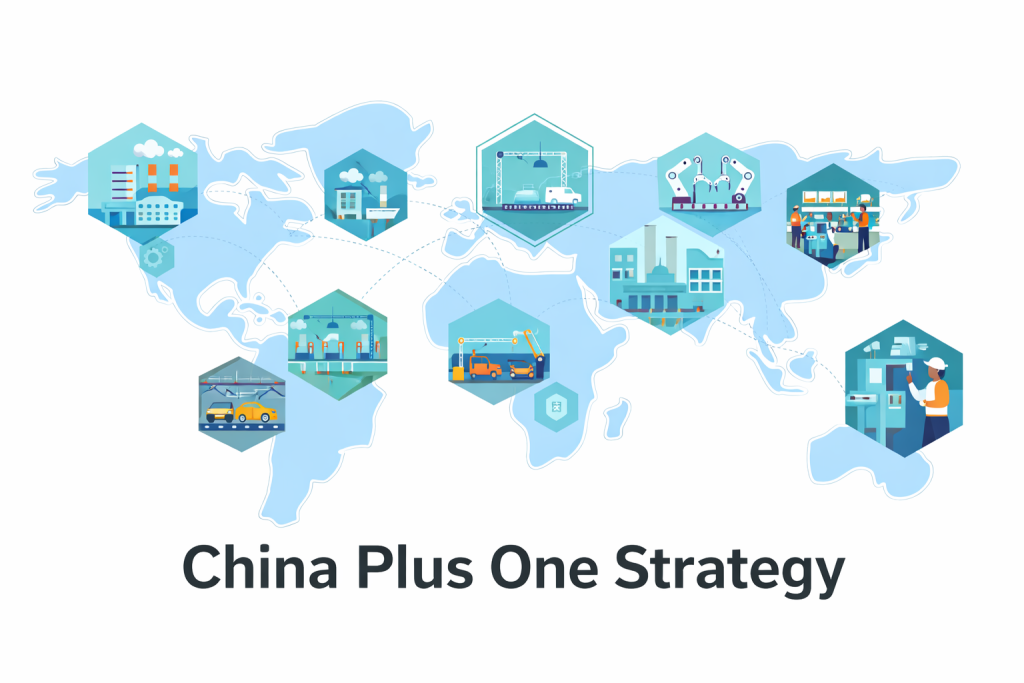
What the China Plus One Strategy Really Means
The china plus one strategy means three simple things.
First, buyers keep China as a core manufacturing base. Second, they add at least one alternative country. Third, they create options instead of single-country dependence.
In practice, this strategy is not anti-China. On the contrary, it supports smarter planning. Buyers gain flexibility while keeping China where it still makes sense. As a result, decisions are based on data, not ideology. The strategy is about choice.
“China Is Cheaper Than Vietnam” Is a Flawed Comparison
Many buyers often say, “China is cheaper than Vietnam.” At first glance, this sounds logical. However, the comparison is usually wrong.
Most buyers compare: FOB China vs FOB Vietnam
Yet FOB pricing shows only part of the picture. Therefore, it leads to weak decisions. Professional buyers should think in first principles. In other words, they should focus on real cost drivers.
First-Principles Cost Thinking: Total Landed Cost
The correct comparison is Total Landed Cost, not FOB. Total Landed Cost includes:
• FOB price
• International freight
• Import duties and tariffs
• Inventory holding cost
• Lead time impact
• Supply chain risk
• Cash flow pressure
When buyers focus only on FOB, they ignore hidden costs. As a result, profit forecasts become inaccurate. Over time, these gaps can damage margins. Therefore, Total Landed Cost should guide sourcing decisions.
Why Vietnam Works as a “Plus One” Option
Vietnam is not trying to replace China. Importantly, it does not need to.
Vietnam works well when buyers need faster lead times. In addition, it helps reduce tariff exposure. Moreover, it supports smaller and more flexible production runs.
Because production is spread across regions, risk is also better managed. As a result, supply chains become more stable. The china plus one strategy is about smart allocation. It is not about moving everything at once.
Final Thought
The china plus one strategy is no longer optional. Instead, it is a practical response to supply chain uncertainty.
By moving beyond FOB prices and focusing on Total Landed Cost, buyers gain clarity. As a result, markets like Vietnam become strategic assets, not backups.
In the end, diversification creates control. With the right options in place, supply chains become stronger, more flexible, and future-ready.