Introduction
In product development, cost and performance often move in opposite directions. However, choosing the highest specification is not always the best strategy. Instead, companies should focus on product development cost optimization to stay competitive and scalable.
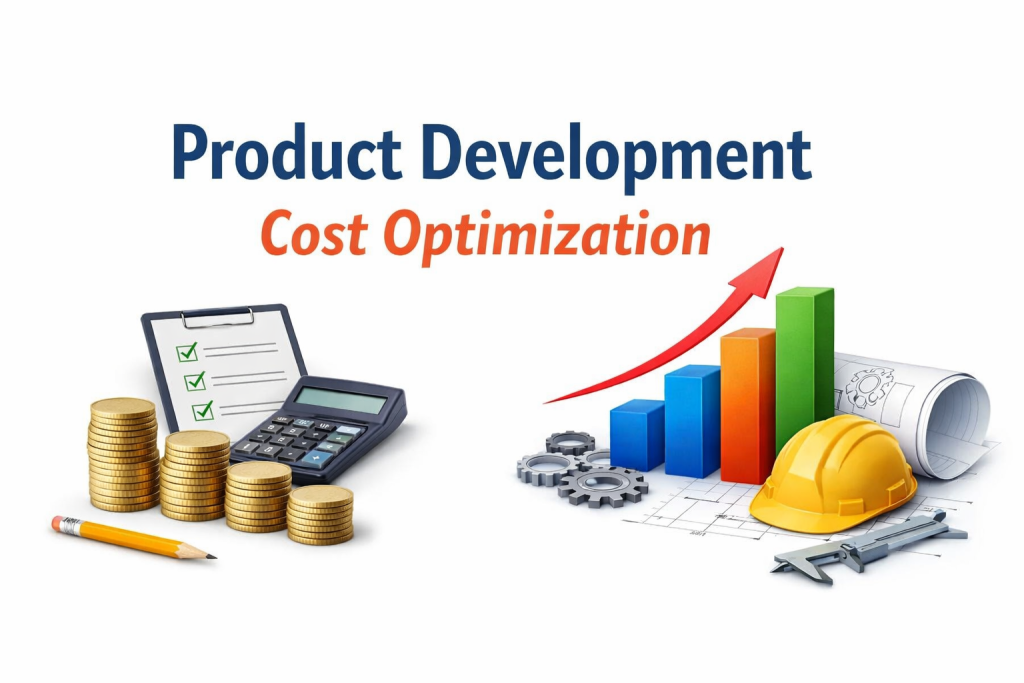
## Product Development Cost Optimization: Finding the Right Balance
First, product teams should define what “good enough” means. In most cases, products do not need the highest performance. Instead, they need to meet real usage needs.
Therefore, teams should:
- Define actual use cases
- Set minimum acceptable performance
- Add a small safety margin
As a result, this approach helps avoid unnecessary cost.
Why High Specification Can Increase Risk
On the one hand, high specification improves performance. However, it also increases cost quickly.
For example:
- Premium materials cost more
- Production becomes more complex
- Quality control becomes harder
Moreover, higher specs often lead to higher MOQ. As a result, inventory risk also increases.
Therefore, over-engineering can slow down scaling.
Cost vs Performance: Understanding the Trade-off
In general, the first 70–80% of performance is cost-efficient. However, the last 20% of improvement can increase cost significantly.
In other words:
- Small performance gain → large cost increase
Because of this, companies should avoid chasing the “best” option too early.
Start Simple, Then Improve
At the early stage, companies should enter the market with a competitive product.
For example:
- Start with a cost-effective version
- Collect customer feedback
- Improve the product step by step
As a result, this reduces risk and improves speed to market.
Scale with a Unique, High-Performance Product
After entering and validating the market, companies can move to the next step. At this stage, it makes sense to develop a more unique product.
For example:
- Upgrade to higher performance materials
- Add unique features or design
- Improve quality to stand out from competitors
As a result, this creates a strong differentiation point. Moreover, it helps build brand value and long-term advantage.
Align Specification with Pricing Strategy
Before finalizing the specification, teams should ask:
- What is the target selling price?
- What is the expected margin?
- What are competitors offering?
Therefore, specification should follow price, not the other way around.
Work with Flexible Suppliers
In addition, supplier flexibility is very important.
For example:
- Suppliers who can research the market
- Suppliers who can suggest solutions to improve product quality
- Suppliers who are willing to modify products and provide the right balance of cost and performance
As a result, teams can develop better products while keeping cost under control.
Conclusion
In conclusion, product development cost optimization is about balance. Companies should not aim for the highest performance at the beginning. Instead, they should focus on fit-for-purpose specifications that meet real needs. Then, after validating the market, they can upgrade the product to create uniqueness and stronger competitive advantage.
You maybe interested in Product Development Tips in Vietnam or Develop New Product in Vietnam: What Buyers Must Prepare Before Starting or Vietnam Research and Development: How to Verify Factory R&D Capability Before Product Development