Introduction
Professional procurement does not focus only on unit price. Instead, it focuses on Total Cost of Ownership (TCO). TCO includes raw materials, logistics, inventory, risk, and payment terms. Therefore, buyers must look at the whole supply chain when they want to reduce manufacturing cost.
Energy and oil prices can change quickly. As a result, many factories face unstable production costs. Raw materials, plastics, transportation, and electricity may all become more expensive. However, companies can still control cost if they use the right sourcing and procurement strategies.
In practice, experienced procurement teams use several methods. For example, they source materials directly from factories, optimize design, and improve logistics planning. In addition, they monitor currency and commodity markets. As a result, they reduce risk and maintain stable production costs.
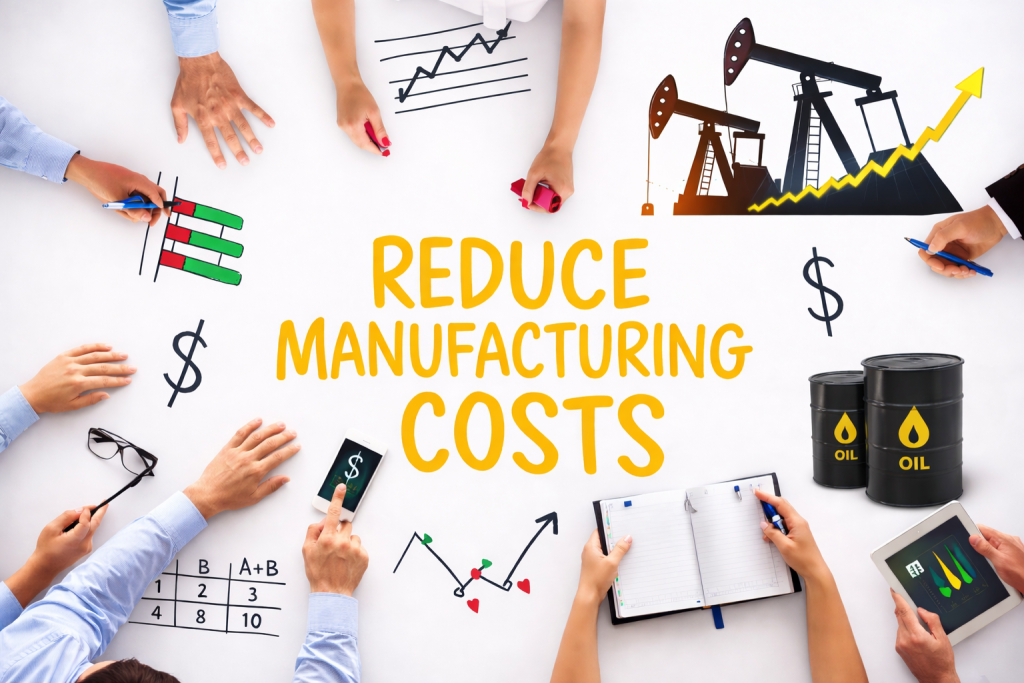
Why Energy Prices Affect Manufacturing Costs
Energy and oil prices influence many parts of manufacturing.
For example:
- plastic resin comes from petroleum
- transportation depends on fuel
- factories use electricity and gas
- shipping costs increase when oil prices rise
Therefore, when oil prices change, production costs often follow.
However, companies can reduce manufacturing cost by managing sourcing strategy and procurement planning.
Strategic Sourcing to Reduce Manufacturing Cost
Strategic sourcing plays a major role in cost control.
First, companies should buy raw materials directly from factories whenever possible. This approach removes trader margins. As a result, buyers usually receive better prices.
For example, plastic materials often cost more when purchased through local intermediaries. However, buyers can secure better deals when they work directly with producers.
Sometimes intermediaries are still necessary. For instance:
- some chemicals require special government certificates
- some products need complex import approvals
- certain distributors have strong regulatory relationships
In those cases, intermediaries help the supply chain run smoothly.
Nevertheless, for products with high material content, direct sourcing remains critical. Material often represents a large portion of product cost. Therefore, competitive sourcing at the material level is essential to reduce manufacturing cost.
Moreover, many companies purchase raw materials based on market indexes such as:
- LME (London Metal Exchange)
- commodity resin indexes
This approach protects both sides when markets fluctuate. Consequently, buyers and suppliers avoid large price disputes.
Global Sourcing and Supplier Bidding
Competition between suppliers helps reduce cost.
Therefore, procurement teams often run bidding processes. Multiple suppliers submit quotations. Buyers then compare prices, lead time, and production capability.
Common sourcing practices include:
- requesting quotations from several factories
- evaluating production capacity and quality
- negotiating long-term cooperation
As a result, suppliers compete for orders. This competition often lowers prices.
In addition, companies increasingly adopt global sourcing.
For example, buyers may shift production from higher-cost countries to more competitive regions. Vietnam, India, and Southeast Asia have become strong manufacturing hubs.
Consequently, buyers gain access to lower labor costs and competitive suppliers.
Cost Engineering to Reduce Manufacturing Cost
Cost engineering focuses on improving product design.
Instead of only negotiating price, procurement teams work with customers and engineers. Together, they review product design and production methods.
Several improvements often reduce cost:
- reduce steel thickness when possible
- replace custom parts with standard parts
- select more suitable materials
- simplify production steps
- improve production speed
For example, a small design change can reduce machining time. As a result, production becomes faster and cheaper.
Therefore, cost engineering plays a critical role in reducing manufacturing cost.
Payment and Contract Optimization
Payment terms also influence production costs.
Suppliers usually offer better prices when payment terms improve. For example, long-term contracts often create stability for both sides.
Common strategies include:
- signing long-term supply contracts
- shifting payment terms from advance TT to 30–60 days
- negotiating stable pricing agreements
As a result, suppliers gain predictable demand. Consequently, they often provide more competitive pricing.
Furthermore, extended payment terms help buyers maintain stronger cash flow.
Financial and Currency Strategies
Currency fluctuations also affect manufacturing cost.
For example, many factories purchase materials in USD but sell products in other currencies. If exchange rates change, production cost may increase.
Therefore, procurement teams monitor currency markets closely.
Key strategies include:
- managing USD and VND exchange exposure
- planning payments at favorable exchange rates
- balancing import and export cash flow
When the local currency weakens, export revenue becomes more valuable. As a result, factories can purchase more materials in local currency.
However, strong currency volatility still creates risk. Therefore, financial planning remains important to reduce manufacturing cost.
Supply Chain Optimization and Logistics Planning
Geopolitical risks can disrupt supply chains.
For instance, conflicts in the Middle East may affect oil supply. If the Strait of Hormuz faces disruption, global energy prices may rise quickly.
Consequently, transportation and raw materials may become more expensive.
To manage these risks, companies improve supply chain planning.
Common approaches include:
- consolidating shipments to reduce logistics cost
- avoiding small and frequent shipments
- diversifying suppliers across different countries
- sourcing closer to the production region
- increasing local sourcing whenever possible
These strategies stabilize supply chains. As a result, companies control logistics cost more effectively.
Process & Procurement Optimization, Stock Planning, and AI Support
Inventory planning plays an important role in cost management.
Companies often purchase materials in advance when markets remain stable. For example, stocking raw materials one or two months earlier can protect factories from sudden oil price spikes.
However, good inventory management is necessary.
Companies must balance:
- material availability
- warehouse cost
- cash flow
Today, many procurement teams use AI tools to improve planning.
AI systems help companies:
- forecast demand
- monitor inventory levels
- detect supply risks
- analyze price trends
As a result, procurement teams receive early alerts about market changes.
In addition, many factories improve production efficiency through:
- Lean manufacturing
- automation systems
- AI-based workflow tools
These improvements increase productivity and reduce production waste.
Supplier Collaboration and Cost Transparency
Strong supplier relationships often reduce cost over time.
Instead of focusing only on negotiation, many companies build long-term partnerships.
For example, suppliers may share detailed cost breakdowns:
- material cost
- labor cost
- overhead
- profit margin
This transparency helps both sides identify savings opportunities.
In some cases, buyers and suppliers share savings equally. For example, a 50/50 gain-sharing model encourages collaboration.
Consequently, both parties benefit from cost improvements.
Supplier Consolidation for Volume Discounts
Supplier consolidation can also reduce cost.
Instead of purchasing small volumes from many suppliers, companies concentrate orders with fewer partners.
This strategy creates larger order volumes. As a result, suppliers can offer volume discounts.
Typical benefits include:
- lower unit prices
- improved production efficiency
- stronger supplier relationships
Therefore, supplier consolidation remains a common procurement strategy.
Managing Macro Risks and Market Volatility
Finally, companies must monitor global economic risks.
Energy shocks, geopolitical tensions, and financial instability all influence production costs.
Therefore, procurement teams follow global developments such as:
- geopolitical conflicts
- energy supply disruptions
- commodity price changes
- currency movements
Many companies also use AI-based forecasting tools. These tools analyze large datasets and identify potential market risks.
Consequently, companies can respond faster to market changes.
Conclusion
Reducing manufacturing cost requires more than simple price negotiation. Instead, companies must manage the entire supply chain and focus on Total Cost of Ownership.
Professional procurement teams combine multiple strategies. They improve sourcing, optimize design, manage contracts, and monitor financial risks. In addition, they strengthen supplier partnerships and apply AI tools for forecasting and planning.
When energy and oil prices fluctuate, these strategies become even more important. Companies that manage sourcing, logistics, and market risk effectively can maintain stable production costs and remain competitive in global manufacturing.