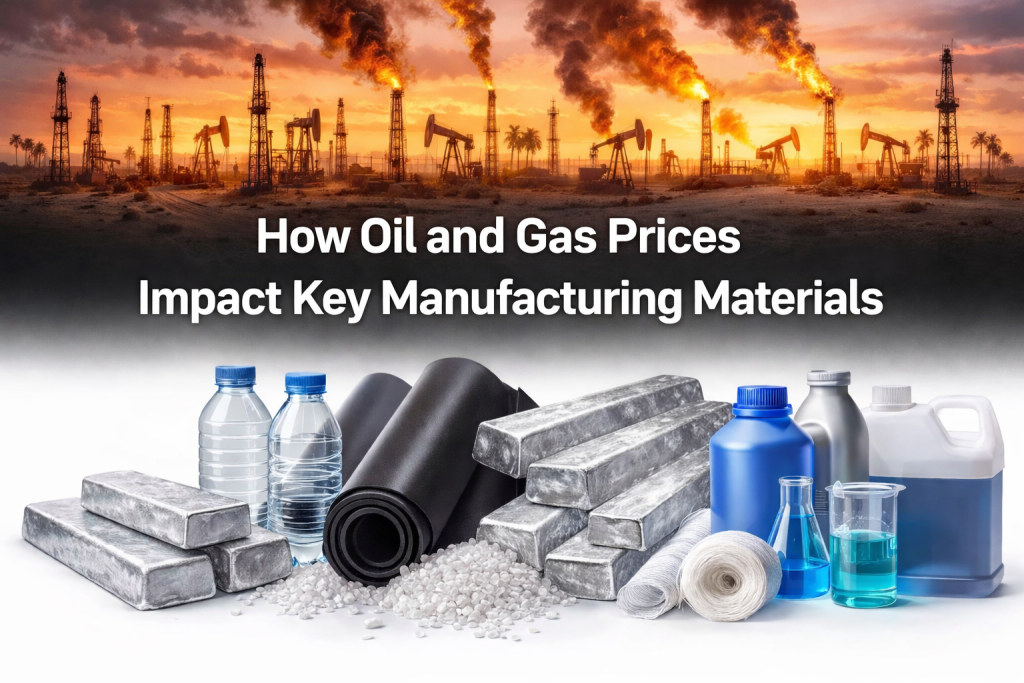
Oil and gas prices affect much more than fuel or logistics. In fact, they influence many industrial materials used in manufacturing.
When oil or gas prices rise, energy costs increase. As a result, factories must spend more to produce materials. At the same time, petrochemical feedstock also becomes more expensive. Therefore, many raw materials experience price changes during energy market volatility.
In recent years, geopolitical tensions in the Middle East have increased uncertainty. For example, disruption risks around the Strait of Hormuz can push energy prices higher. Consequently, manufacturers often face rising material costs across several industries.
Below are some of the key materials impacted by oil and gas prices in global manufacturing.
Why Oil and Gas Prices Affect Manufacturing Materials
Oil and gas influence manufacturing materials through several mechanisms.
First, energy is a major production cost. Many factories rely on natural gas or electricity during production. Therefore, higher energy prices increase operating costs.
Second, many materials come directly from petrochemical feedstock. Oil and natural gas serve as raw inputs for plastics, chemicals, and synthetic fibers.
Third, transportation costs also rise when fuel prices increase. As a result, material supply chains become more expensive.
Because of these factors, energy markets strongly influence industrial material prices.
Steel: Energy Cost Drives Steel Production Price
Steel production requires significant energy. For example, blast furnaces use coal, gas, and electricity during smelting.
When natural gas prices increase, steel production costs often rise as well. In addition, electricity costs affect electric arc furnace operations.
As a result, steel prices often follow trends in energy markets.
Steel is widely used in:
- Construction
- Machinery
- Automotive components
- Industrial equipment
Therefore, energy price volatility can influence many manufacturing sectors through steel.
Plastics and Polymers from Petrochemicals
Plastics are among the materials most closely tied to oil and gas prices. This is because most plastics originate from petrochemical feedstock.
Common plastic materials include:
- Polyethylene (PE)
- Polypropylene (PP)
- PET
- PVC
These materials come from petrochemical compounds such as ethylene and propylene. Oil and natural gas production supplies these chemicals.
Therefore, when crude oil prices rise, plastic resin prices often increase as well.
These plastics are widely used in:
- Packaging
- Injection molded parts
- Bottles and containers
- Tarpaulin and industrial films
As a result, many manufacturing industries feel the impact of petrochemical price changes.
Aluminum: One of the Most Energy Intensive Metals
Aluminum production consumes a large amount of electricity. In fact, energy can represent 30–40% of total production cost.
The aluminum smelting process requires electrolysis. This process uses continuous high-power electricity.
Therefore, aluminum prices are highly sensitive to energy costs.
When oil and gas prices rise, electricity prices often increase as well. Consequently, aluminum production becomes more expensive.
Aluminum is widely used in:
- Automotive manufacturing
- Aerospace components
- Packaging materials
- Consumer electronics
Because of this, energy market volatility can quickly affect aluminum prices.
Industrial Chemicals Made from Petrochemical Feedstock
Many industrial chemicals come directly from oil and natural gas.
Petrochemical feedstock is used to produce base chemicals such as:
- Ethylene
- Propylene
- Butadiene
- Styrene
These chemicals serve as building blocks for many industrial products.
For example, they are used in:
- Adhesives
- Coatings
- Solvents
- Industrial resins
Therefore, chemical prices often move together with oil and gas markets.
As energy costs rise, chemical manufacturing also becomes more expensive.
Synthetic Textile Fibers Such as Polyester and Nylon
Many textile fibers are petroleum based.
Examples include:
- Polyester
- Nylon
- Acrylic
These fibers are produced from petrochemical derivatives such as ethylene glycol and caprolactam.
When oil prices increase, the cost of these raw materials often rises. As a result, synthetic textile fibers become more expensive.
These fibers are widely used in:
- Apparel
- Technical textiles
- Industrial fabrics
- Outdoor materials
Therefore, textile manufacturing can also feel the effects of energy market volatility.
Synthetic Rubber Used in Tires and Industrial Parts
Synthetic rubber is another material linked closely to petrochemicals.
Key feedstock materials include:
- Butadiene
- Styrene
- Ethylene
These chemicals originate from petroleum refining and petrochemical production.
Synthetic rubber is commonly used in:
- Tires
- Gaskets
- Seals
- Industrial hoses
Because petrochemical feedstock prices fluctuate with oil markets, rubber prices may also change.
Therefore, automotive and industrial supply chains can be affected.
Fertilizers and Agricultural Chemicals
Fertilizer production relies heavily on natural gas.
Ammonia, one of the most important fertilizers, is produced using hydrogen derived from natural gas. Therefore, gas prices strongly influence fertilizer costs.
When natural gas prices increase, fertilizer production becomes more expensive.
Major fertilizers include:
- Ammonia
- Urea
- Ammonium nitrate
As a result, energy market volatility can influence agricultural supply chains as well.
Conclusion
Oil and gas prices affect far more than fuel costs. In fact, they influence many industrial materials used in manufacturing.
Energy intensive materials such as steel and aluminum depend on stable energy prices. At the same time, petrochemical based materials such as plastics, synthetic fibers, and rubber rely directly on oil and gas feedstock.
Therefore, when energy prices rise due to geopolitical tension or supply disruption, manufacturing material costs often increase as well.
For manufacturers and sourcing teams, understanding these materials impacted by oil and gas prices helps improve supply chain planning. In addition, companies can better manage cost risks during periods of energy market volatility.
You maybe interested in How to Reduce Manufacturing Costs When Energy and Oil Prices Fluctuate