Introduction
Vietnam has become a major manufacturing hub in Asia. As a result, exports to the United States have increased quickly.
However, this growth also raises Vietnam manufacturing trade concerns in US trade policy discussions. In particular, US reports often mention market access, state-owned enterprises, and currency policy.
Therefore, companies that source from Vietnam should understand these issues. Moreover, investors and buyers should know how these concerns may affect global supply chains.
This article explains the main trade concerns related to Vietnam manufacturing.
Vietnam Manufacturing Trade Concerns in US Trade Policy
US trade agencies often review countries that have large trade surpluses. Vietnam is now among the top countries with a large surplus with the United States. As a result, US policymakers study several aspects of Vietnam’s economy.
In general, the concerns focus on three main areas:
- market access barriers
- state-owned enterprise activities
- currency and financial policy
Each factor may influence trade balance and manufacturing competitiveness.
Market Access and Import Barriers
First, US reports often discuss market access in Vietnam.
Market access refers to how easily foreign companies can sell products in a country. If barriers are high, imported products may struggle to enter the market.
For example, the US sometimes highlights several issues:
- higher import tariffs than developed economies
- licensing requirements for certain industries
- product standards or inspection procedures
- limits in some regulated sectors
However, Vietnam has reduced many tariffs through free trade agreements. For instance, the country joined several major trade deals in recent years. As a result, tariff levels have fallen for many products.
Nevertheless, some sectors still have restrictions. Therefore, market access remains a discussion point in US trade reports.
State-Owned Enterprise Activities
Second, US analysts often mention state-owned enterprises (SOEs).
SOEs are companies owned or controlled by the government. These firms operate in several strategic sectors in Vietnam.
Common sectors include:
- energy
- telecom
- oil and gas
- infrastructure
- mining
Because of this structure, US reports sometimes argue that SOEs may receive advantages.
For example:
- easier access to financing
- government support during financial stress
- priority access to resources
Therefore, US analysts sometimes say this structure may influence competition in certain industries.
However, Vietnam has gradually expanded the private sector. As a result, private companies now contribute a large share of GDP.
Currency Policy and Exchange Rates
Third, US reports sometimes examine currency policy.
Exchange rates can affect export competitiveness. When a currency becomes weaker, exports usually become cheaper in global markets.
In the past, the United States reviewed Vietnam’s currency policy closely. At one point, US authorities even labeled Vietnam as a currency manipulator. However, both countries later resolved the issue through discussions.
Today, analysts mainly monitor three indicators:
- trade surplus with the United States
- current account balance
- foreign exchange market intervention
If these indicators rise quickly, policymakers may increase monitoring.
Nevertheless, exchange rate movements often reflect many economic factors. For example:
- capital flows
- global interest rates
- domestic investment spending
Therefore, currency changes do not always mean intentional devaluation.
Industrial Overcapacity Concerns
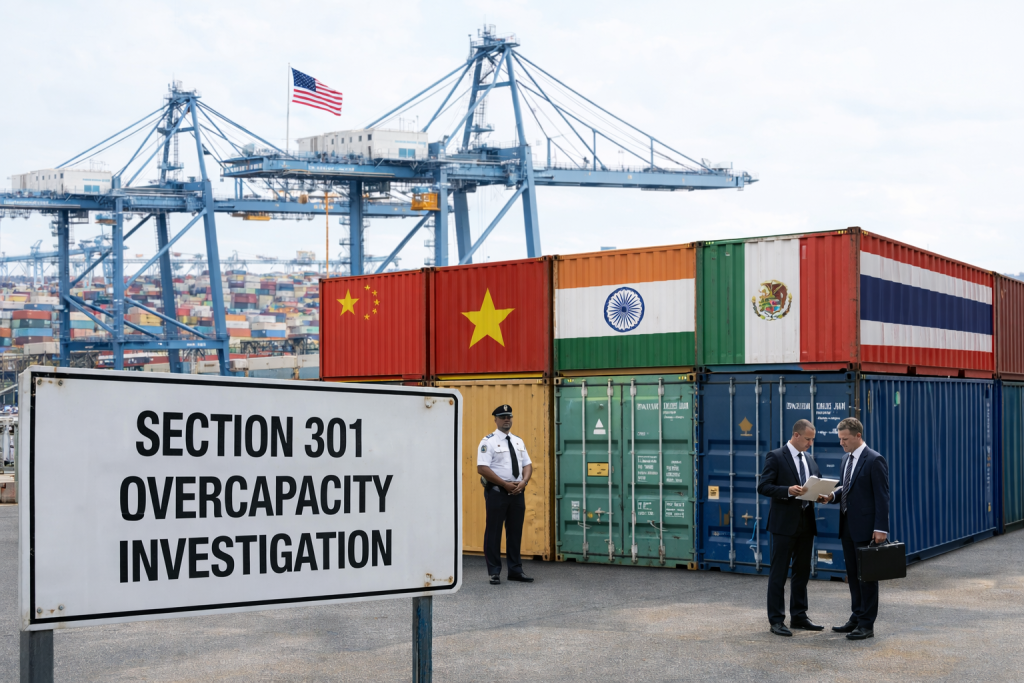
Another topic in recent trade discussions is industrial overcapacity.
Overcapacity means factories can produce more than market demand. When this happens, companies may export excess production.
Some industries often appear in trade discussions:
- steel and metal products
- solar panels
- chemicals and industrial materials
These sectors have expanded quickly in Asia. As a result, global supply has increased.
However, in Vietnam many manufacturing sectors still focus on export assembly. Therefore, domestic overcapacity is not always the main issue. Instead, analysts sometimes study how regional supply chains influence production.
Why These Issues Matter for Supply Chains
These trade discussions may affect global manufacturing strategies.
First, trade investigations can lead to tariffs. As a result, companies may adjust sourcing plans.
Second, policy changes may influence investment decisions. For example, companies may diversify production across several countries.
Third, buyers may review supply chain transparency more carefully.
Therefore, companies sourcing from Vietnam should monitor trade policy developments. At the same time, they should maintain flexible supply networks.
Conclusion
Vietnam has become an important manufacturing center in global supply chains. Consequently, trade relationships with the United States continue to grow.
However, this growth also creates Vietnam manufacturing trade concerns in policy discussions. These concerns mainly relate to market access, SOE activities, currency policy, and industrial capacity.
Nevertheless, Vietnam remains a competitive manufacturing location. For this reason, many companies still view the country as a key part of the Asia supply chain. At the same time, businesses should follow trade policy developments to manage potential risks.
You maybe interested in Forced Labor Supply Chain Investigation: Top Manufacturing Countries Exporting to the US