Sourcing from Vietnam offers US buyers new manufacturing options. However, communication gaps between local factories and American customers can slow projects and damage business relationships.
Vietnamese factories often expect buyers to respond quickly and work closely with their teams. Meanwhile, US buyers expect proactive updates, fast follow-ups, and reliable customer service.
A local sourcing agent can bridge this gap. This article explains why communication matters, how these differences affect sourcing, and how local support can help both sides work better together.
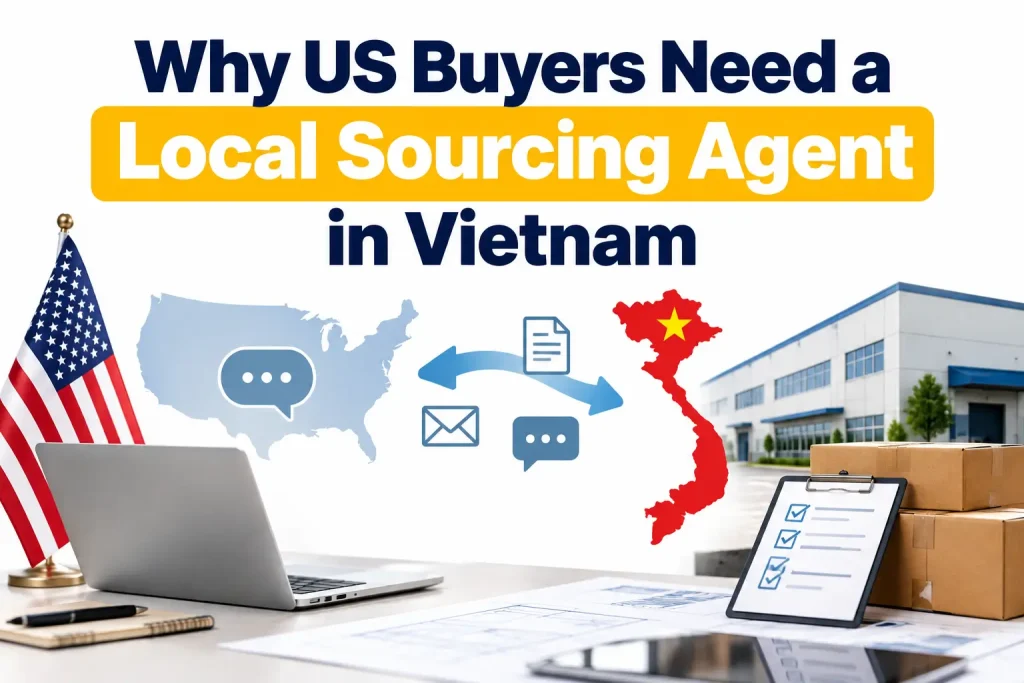
The Communication Gap Between Vietnamese Factories and US Buyers
Vietnamese factories and US buyers may have different expectations for communication. These differences can create problems even when both sides want a successful project.
For example, a factory may expect a buyer to confirm specifications quickly before preparing samples. However, the buyer may still be comparing several suppliers and may not be ready to commit.
Common communication challenges include:
- Slow responses: Factories may wait for buyer feedback before moving to the next step.
- Limited follow-up: Some factories do not send regular updates unless buyers ask for them.
- Different expectations: Buyers may expect clear timelines, while factories may avoid committing to dates before confirming details.
- Unclear communication: Technical requirements, pricing, and sample feedback may not be fully understood.
- Limited customer service: Some manufacturers focus on production rather than the overall customer experience.
In reality, these issues are not always caused by poor manufacturing skills. Instead, they often reflect different working styles and expectations.
Why US Buyers Choose Factories with Better Communication
US buyers usually have several sourcing options. They can compare factories in Vietnam with suppliers in China, Thailand, Indonesia, and other manufacturing markets.
Therefore, competitive pricing and production capabilities may not be enough to win an order. Buyers also consider how easy a supplier is to work with.
Good factory communication helps buyers:
- Receive quotations and answers without unnecessary delays.
- Understand production timelines and potential risks.
- Resolve product issues before they affect delivery.
- Track sample development and production progress.
- Make decisions with greater confidence.
For example, imagine two factories offer similar prices for a custom plastic product. Factory A has good equipment but takes several days to answer basic questions. Factory B responds quickly, explains technical limitations, and provides clear updates.
Even if both factories can meet the product specifications, the buyer may prefer Factory B. Better communication reduces uncertainty and makes project management easier.
However, this does not mean every Vietnamese factory communicates poorly. Many manufacturers work effectively with international customers. The challenge is finding partners whose working style matches the buyer’s expectations.
How a Local Sourcing Agent Bridges the Communication Gap
A local sourcing agent can help connect US buyers with Vietnamese factories. The agent understands local business practices while also recognizing the expectations of international customers.
Instead of relying on occasional emails between two parties, the agent can help keep communication organized and projects moving.
Key areas of support include:
- Supplier follow-up: Contact factories directly and request updates on quotations, samples, and production.
- Technical clarification: Help both sides confirm product specifications, materials, dimensions, and quality requirements.
- Timeline management: Follow up on milestones and identify delays before they become larger problems.
- Problem-solving: Discuss issues with factory teams and communicate practical solutions to buyers.
- Expectation management: Explain what each side needs to do and when feedback or decisions are required.
For instance, a US buyer may request a sample revision but provide incomplete feedback. A local sourcing agent can clarify the changes, confirm them with the factory, and follow up until the next sample is ready.
As a result, both sides spend less time resolving misunderstandings. The buyer gets clearer information, while the factory receives more actionable instructions.
How US Buyers and Vietnamese Factories Can Work Better Together
A sourcing agent can improve communication, but both buyers and factories still need to cooperate. Clear processes make collaboration easier and reduce unnecessary delays.
1. Set Clear Communication Expectations
At the start of a project, both sides should agree on response times, update frequency, and the main contact person.
For example, buyers and factories can agree to acknowledge important emails within one business day. Complex technical questions may require more time, but the factory should explain when it expects to respond.
2. Share Complete Product Requirements
Incomplete specifications often lead to repeated questions and delayed quotations. Therefore, buyers should provide clear drawings, materials, dimensions, testing requirements, and packaging details whenever possible.
Meanwhile, factories should identify missing information early instead of waiting until sample development begins.
3. Provide Regular Progress Updates
Factories should not wait for buyers to ask about every milestone. Short updates on material preparation, sample development, and production status help build trust.
Similarly, buyers should provide timely feedback when factories need approvals or technical decisions.
4. Communicate Problems Early
Delays and technical challenges can happen in any manufacturing project. However, early communication gives both sides more time to find solutions.
For example, if a material cannot meet a required temperature rating, the factory should explain the limitation as soon as possible. The buyer can then review alternative materials or adjust the requirements.
5. Build a Long-Term Working Relationship
Strong supplier relationships require more than competitive pricing. Both sides need transparency, consistent follow-up, and a willingness to solve problems.
Over time, this approach helps factories understand customer expectations and gives buyers more confidence in their Vietnamese partners.
Direct Factory Sourcing vs. Working with a Local Sourcing Agent
Direct factory sourcing can work well when buyers have the time, experience, and local resources to manage suppliers themselves. It also gives buyers direct access to factory teams and technical discussions.
However, managing communication across time zones, language differences, and business practices can take significant effort.
A local sourcing agent may be more useful when buyers need additional support with:
- Finding and screening suitable manufacturers.
- Following up on quotations and sample development.
- Communicating technical requirements clearly.
- Monitoring production progress and quality concerns.
- Resolving issues between buyers and factory teams.
The right approach depends on the project’s complexity, the buyer’s resources, and the supplier’s communication skills.
For a more detailed comparison, read Direct Factory Sourcing vs. Sourcing Agents: Which Is Better?.
Ultimately, a sourcing agent should provide more than introductions to factories. The real value comes from helping buyers and manufacturers work together effectively throughout the sourcing process.
Conclusion
Vietnam offers valuable manufacturing opportunities, but successful sourcing requires more than finding a factory with the right price and capabilities. Clear communication and reliable follow-up are equally important.
When buyers and factories struggle to meet each other’s expectations, projects can slow down and business opportunities can disappear. A local sourcing agent can help close this gap.
For US buyers exploring Vietnam, choose manufacturing partners who understand both your product requirements and your expectations for communication. A strong working relationship can make the difference between a difficult project and a successful long-term partnership.