Many buyers are moving production from China to Vietnam. However, many importers still do not understand how U.S. import tariffs work.
In most cases, buyers only check the base duty rate. However, the real tariff can be much higher because of trade programs, anti-dumping cases, or transshipment risks.
Therefore, before placing orders in Vietnam, buyers should understand the full tariff structure.
In general, import duty can be estimated like this:
Import Duty = Base Tariff + Tariff Program / Trade StatusHowever, there are several layers involved.
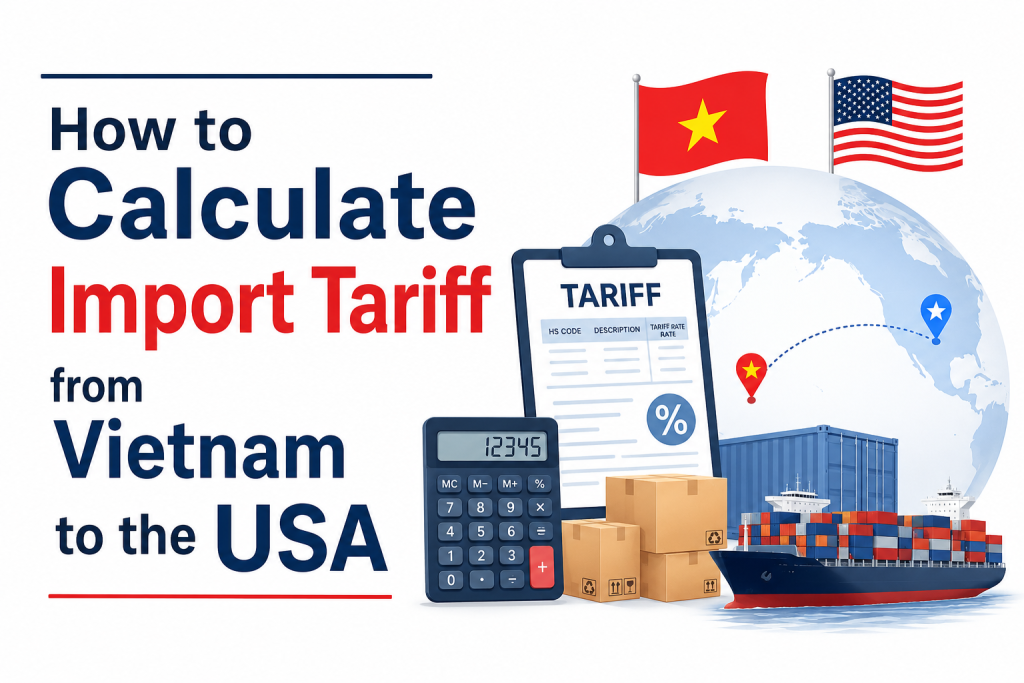
How to Calculate Import Tariff from Vietnam: Identify the HS Code
The HS code is the most important step when estimating import tariffs.
Every product has an HS or HTS code. Moreover, the tariff depends completely on this classification.
For example:
- Stainless steel screws have a different tariff than aluminum furniture
- Cotton T-shirts have a different tariff than polyester apparel
- Power adapters have a different tariff than finished electronics
For U.S. imports, buyers can use the official HTS database:
You can search by:
- Product description
- Material
- Intended use
- Manufacturing process
Most importantly, a wrong HS code can completely change the duty rate.
Therefore, buyers should confirm the HS code carefully before placing orders.
How to Calculate Import Tariff from Vietnam: Check Trade Status
After identifying the HS code, buyers should review the tariff program and trade status.
This part changes frequently. Therefore, many buyers miss additional tariffs or trade risks.
Below are some important areas to review:
- Reciprocal tariffs
- Tariffs related to transshipment risks
- Anti-Dumping and Countervailing Duties (AD/CVD)
- Section 301 or Section 232 tariffs
More details here Import Duty and Tariff When Sourcing from Vietnam
In some cases, the base tariff looks low. However, the final import duty can become much higher after additional trade measures.
Furthermore, U.S. trade policy changes often. As a result, buyers should monitor updates closely.
Why Local Support Matters
Tariff programs and trade status can change at any time. Therefore, buyers should work with someone local who understands the actual situation in Vietnam.
For example, local teams can help buyers:
- Review supplier production status
- Identify transshipment risks and CO issues
- Monitor local export conditions
- Follow Vietnam–U.S. trade relationship updates
In addition, local support helps buyers avoid common sourcing mistakes.
Conclusion
Understanding import tariffs from Vietnam is now more important than ever.
Although many buyers focus only on product pricing, tariff risks can strongly affect the final landed cost.
Therefore, buyers should:
- Confirm the HS code carefully
- Review trade status regularly
- Monitor AD/CVD risks
- Work with reliable local partners
Inbox us for more information. We can provide free support and share practical sourcing insights from Vietnam.