The global plush toy market keeps growing every year. As a result, many buyers now search for alternative sourcing locations outside China. Vietnam has become one of the most interesting options in Asia.
Today, Vietnam supports many types of stuffed animal production. Local factories can produce teddy bears, plush dolls, rag dolls, baby plush toys, and promotional plush items. In addition, some suppliers already export to the US, Europe, Japan, and Korea.
However, buyers still need to understand the real supply chain situation before placing orders. Vietnam has strengths, but it also has limits. Therefore, choosing the right supplier is very important.
Why Buyers Look at Vietnam Stuffed Animals Suppliers
Many importers want better diversification. At the same time, they want stable production and lower tariff risks.
Because of this, Vietnam has received more attention from global buyers.
Main advantages include:
- Competitive labor cost
- Stable political environment
- Good export experience
- Strong sewing industry background
- Growing factory investment
- Easier communication compared to smaller markets
Moreover, many Vietnamese suppliers already work with:
- Spin Master
- Mattel
- Hasbro
- Tomy
As a result, factories already understand: US toy compliance requirements, export documentation, product consistency standards, large-scale production management.
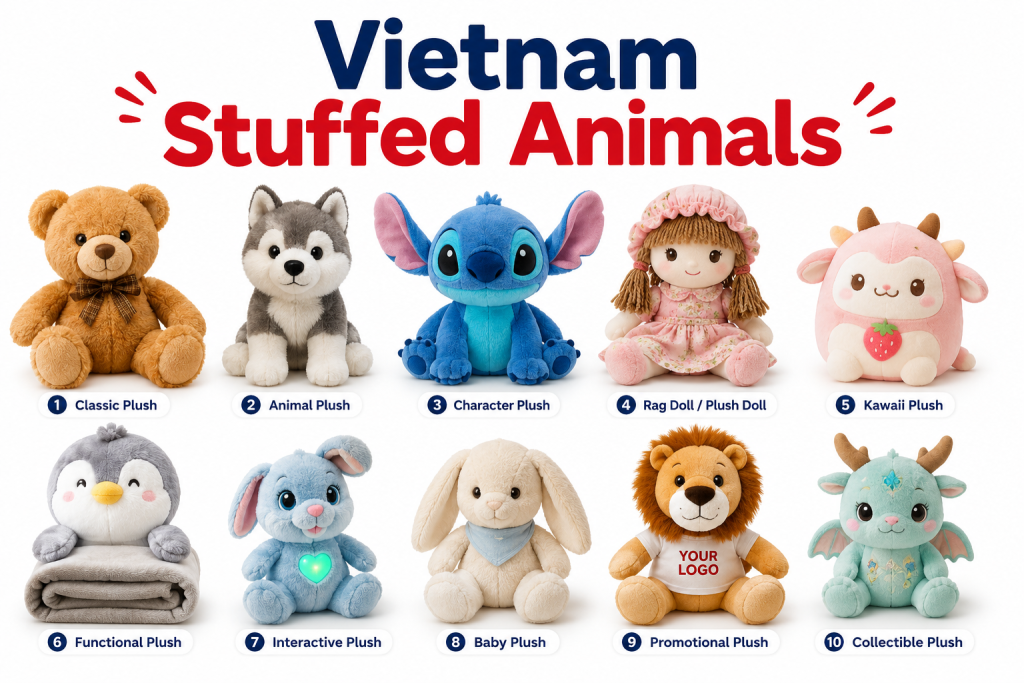
Types of Vietnam Stuffed Animals Factories
Vietnam suppliers support many plush toy categories. However, not every factory can handle all product types. Some factories only produce simple plush items. Meanwhile, others can develop high-end custom products for the US market.
🐻 Classic Plush Toys
This is the most common category.
Examples:
- teddy bears
- rabbits
- dogs
- simple soft toys
Most Vietnam factories can produce these items.
🐶 Animal Plush Toys
These products look like real animals or cartoon animals.
Common products:
- cats
- dinosaurs
- sea animals
- wildlife plush toys
This category is popular in gift shops and toy stores.
🎬 Character Plush Toys
These plush toys follow licensed characters.
Examples:
- movie characters
- anime characters
- game mascots
However, licensed products require higher quality control and strict consistency.
👧 Rag Dolls and Plush Dolls
These products focus more on sewing details.
Examples:
- fabric dolls
- rag dolls
- soft dolls for children
Moreover, handmade sewing skill is very important for this category.
🍓 Kawaii Plush Toys
These toys focus on cute design and soft feeling.
Popular styles include:
- pastel colors
- oversized heads
- emotional faces
This category sells very well online.
🛏️ Functional Plush Toys
These products combine plush toys with other functions.
Examples:
- plush pillows
- blanket plush toys
- plush backpacks
Therefore, factories need stronger pattern development capability.
🤖 Interactive Plush Toys
These toys include electronic parts.
Examples:
- sound modules
- talking toys
- moving plush toys
As a result, production becomes more complex.
👶 Baby Plush Toys
This category requires the strictest safety standards.
Products include:
- baby comfort toys
- infant plush toys
- plush rattles
Additionally, buyers often request embroidery instead of plastic eyes.
🎁 Promotional Plush Toys
Many companies use plush toys for marketing campaigns.
These products usually require:
- low MOQ
- fast production
- logo customization
🎨 Collectible Plush Toys
These products target collectors instead of children.
Examples:
- limited edition plush toys
- artist collaboration plush items
- designer plush products
Therefore, product details become much more important.
Material Supply Chain for Vietnam Stuffed Animals
Vietnam has strong sewing capacity. However, the plush toy material supply chain is still developing.
Materials available locally:
- polyester stuffing
- sewing thread
- woven labels
- packaging
- basic fabrics
Materials often imported:
- minky fabric
- faux fur
- plastic safety eyes
- sound modules
- specialty trims
Most imported materials come from China.
Therefore, lead time may increase if buyers need custom fabrics or colors.
Compliance Requirements for US Buyers
This is one of the most important topics in the plush toy business.
US buyers often require:
- ASTM F963
- CPSIA compliance
- CPC documentation
- lead testing
- phthalate testing
Moreover, baby plush toys require stricter safety standards.
Common compliance risks:
- weak stitching
- detachable small parts
- poor stuffing quality
- failing chemical tests
Therefore, experienced export factories usually work with testing labs before shipment.
Quality Control and Compliance Preparation
The US market has very strict safety requirements for stuffed animals and plush toys. Because of this, buyers should test samples very carefully before applying certificates and compliance documents.
Otherwise, buyers may lose time and money during the approval process.
Buyers should check:
- sewing strength
- stuffing quality
- embroidery quality
- detachable accessories
- fabric consistency
- chemical compliance
In addition, material control during production is extremely important.
For example:
- changing fabric suppliers
- using different stuffing
- replacing accessories
can create compliance risks later.
Therefore, experienced suppliers usually maintain strict material tracking systems during production.
Limitations of Vietnam Stuffed Animals Supplier Network
Vietnam has many stuffed animal suppliers on paper. However, the real capability gap between factories is very large.
Most suppliers mainly produce:
- low-end plush toys
- local market products
- simple promotional items
As a result, many factories do not have enough experience for high-end US market projects.
Common supplier limitations include:
- limited machine capability
- weak product development skill
- low experience with custom structures
- inconsistent sewing quality
- limited handmade sewing skill
Meanwhile, many US buyers want highly customized plush toys to create product differentiation.
For example, buyers may request:
- complex shapes
- mixed materials
- hidden stitching
- difficult embroidery positions
- detailed handmade finishing
Unfortunately, standard plush toy machines often cannot handle these complex designs alone.
Therefore, factories need:
- experienced sewing workers
- handmade sewing capability
- strong development teams
- experience with premium export projects
This is one of the biggest challenges in Vietnam’s stuffed animal supply chain today.
Many suppliers can produce simple plush toys. However, only a smaller group of factories can meet high-end US customer requirements consistently.
Final Thoughts on Vietnam Stuffed Animals Supply Chain
Vietnam continues to grow as a stuffed animals sourcing location. Today, the country already supports many export programs for global buyers.
However, buyers should understand the real supply chain structure before starting production. Vietnam works best when factories match the right product type and order size.
Moreover, compliance and quality control remain critical. Therefore, supplier selection should never focus only on price.
With the right sourcing strategy, Vietnam stuffed animals suppliers can become a stable long-term manufacturing partner for international brands and importers.