Introduction
Many factories in Vietnam want to sell directly to U.S. retailers. At first, this idea sounds logical. However, reality is more complex.
A good product alone is not enough. In fact, success in the U.S. market requires more than manufacturing.
Therefore, many factories struggle when they try to go direct. To understand why, we need to look at how the market really works.
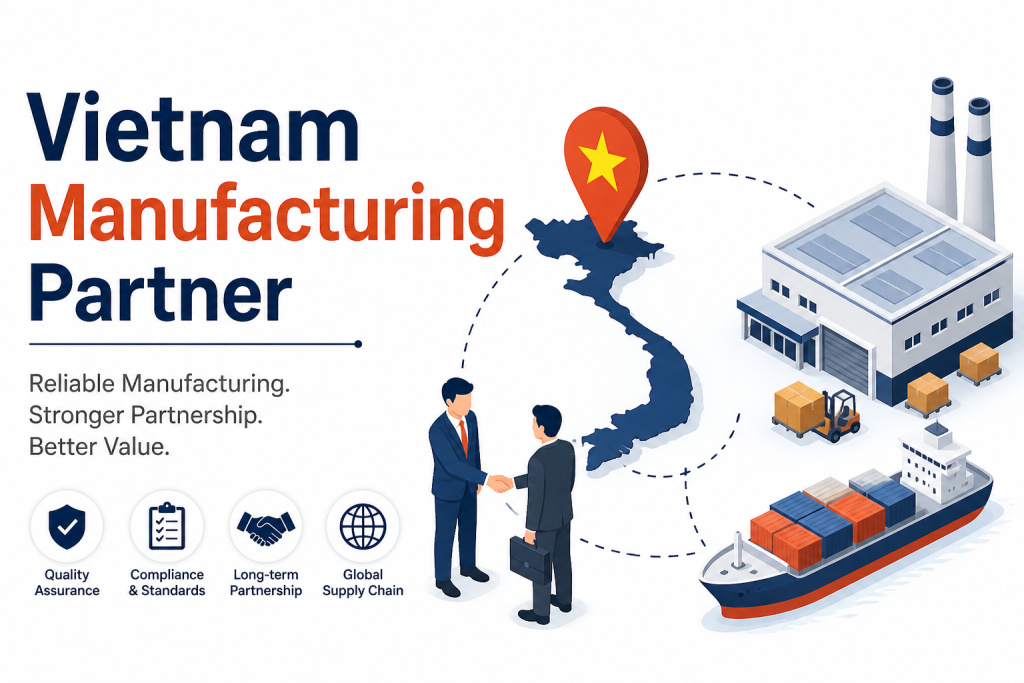
Vietnam Manufacturing Partner: Product vs Market Requirements
Most factories focus on production. However, the U.S. market requires two layers.
Product Layer
Factories in Vietnam are strong in this area. For example:
- Design and basic functionality
- Engineering and materials
- Materials and compliance
- Innovation and differentiation
However, this is only half of the story.
Market & After-Market Layer
This is where many factories lack experience. For instance:
- Product liability insurance
- Branding and positioning
- Marketing strategy and channel fit
- Packaging and storytelling
- Customer service and warranty systems
As a result, even a good product may fail in the U.S. market.
What Traders and Importers Actually Do
Many factories think traders are just middlemen. However, this is not correct.
In reality, traders and importers add critical value. For example:
- They understand U.S. consumers
- They manage compliance and risk
- They build brand positioning
- They handle retailer relationships
- They manage after-sales issues
Therefore, they turn a product into a business.
Without these roles, factories face many gaps. Find out more: Why US Buyers Prefer Working with a Vietnam OEM Manufacturer Instead of Buying Direct
Why Going Direct to Retailers Is Risky
Many factories want to skip intermediaries. However, this strategy is not always effective.
First, U.S. retailers expect ready-to-sell products.
Second, they expect full support, not just production.
As a result, factories must handle:
- Compliance requirements
- Product liability risks
- Marketing performance
- Retail communication
Moreover, retailers prefer experienced partners.
Therefore, new factories often face:
- Failed product launches
- Low sales performance
- Financial losses
A Better Strategy: Learn Before Going Direct
Instead of going direct too early, factories should take a step-by-step approach.
Step 1: Work with Traders
First, factories should collaborate with traders or importers.
This helps them:
- Learn how products are positioned
- Understand pricing structures and margins
- Understand U.S. requirements
- See real market feedback
Step 2: Build Internal Capability
Next, factories should improve their skills. For example:
- Basic branding knowledge
- Packaging development
- Compliance understanding
- Product improvement beyond OEM
Step 3: Expand Gradually
Finally, factories can move forward step by step:
- Offer more value-added services
- Move from OEM to ODM or OBM
- Test direct sales with smaller buyers
As a result, risk becomes lower.
Manufacturing Alone Is Not Enough
Vietnam is strong in manufacturing. However, the U.S. market requires more.
Successful suppliers do not only produce. Instead, they:
- Understand the market
- Invest in product development
- Learn from experienced partners
Therefore, they grow faster and more sustainably.
Conclusion
Going direct to U.S. retailers is not a shortcut. Instead, it is a long process.
Factories that skip the learning phase often fail. However, factories that learn and improve can succeed.
In the long run, the best strategy is clear: start with partners, build capability, and then go direct.