Introduction
Peak season manufacturing is one of the most challenging periods in the supply chain. During this time, demand increases quickly while factory capacity remains limited.
Many buyers believe they can place orders whenever they need products. However, that approach often creates delays, higher costs, and supply chain risks.
As peak season approaches, factories start allocating production capacity months in advance. Therefore, buyers with accurate forecasts gain a major advantage. They secure production slots earlier and receive higher priority from suppliers.
In contrast, buyers who place orders at the last minute often struggle to find available capacity. As a result, they may face longer lead times or miss important sales seasons.
This article explains why factories prioritize buyers with forecasts and how buyers can protect their supply chain during peak season.
What Is Peak Season Manufacturing?
Peak season manufacturing refers to a period when factories receive significantly more orders than usual.
For many consumer products, peak season starts several months before major retail events, including:
- Black Friday
- Cyber Monday
- Christmas
- New Year promotions
- Back-to-school season
As demand rises, factories must manage limited resources. These resources include:
- Production lines
- Machinery
- Workers
- Raw materials
- Warehouse space
- Sample room capacity for product development and approvals
Because capacity is limited, factories cannot accept every order immediately.
Why Factory Capacity Becomes Limited During Peak Season Manufacturing
Many buyers assume factories can simply add more workers when orders increase. However, manufacturing does not work that way.
A factory needs time to:
- Purchase raw materials
- Schedule production lines
- Train workers
- Plan quality inspections
- Arrange shipping schedules
Furthermore, suppliers of raw materials also experience peak demand. Therefore, delays can occur throughout the supply chain.
As a result, factory capacity becomes a valuable resource during peak season manufacturing.
How Factories Prioritize Buyers During Peak Season Manufacturing
When demand exceeds capacity, factories must decide which customers receive priority.
In most cases, factories prioritize buyers based on business value and planning visibility.
Typical priority levels include:
1. Strategic Customers
These customers:
- Place large orders
- Buy regularly throughout the year
- Provide long-term business opportunities
- Share forecasts in advance
Therefore, factories often reserve capacity for them first.
2. Existing Customers With Forecasts
These buyers may not be the largest customers. However, they provide clear demand forecasts and production plans.
As a result, factories can prepare resources earlier and reduce production risks.
3. Existing Customers Without Forecasts
These customers maintain relationships with suppliers. However, they often place orders without advance planning.
Therefore, factories may struggle to reserve capacity for them.
4. New Customers and Spot Orders
These buyers typically receive the lowest priority during peak season.
By the time they place orders, factory schedules may already be full.
Consequently, they often experience:
- Longer lead times
- Higher prices
- Limited production availability
Why Forecasts Matter in Peak Season Manufacturing
Forecasts help factories prepare for future demand.
More importantly, forecasts allow suppliers to make better decisions before orders arrive.
With accurate forecasts, factories can:
- Reserve production capacity
- Purchase materials earlier
- Plan labor requirements
- Schedule production efficiently
- Reduce operational risks
In addition, forecasts create confidence between buyers and suppliers.
When a buyer shares a realistic forecast, the factory gains visibility into future demand. Therefore, the supplier becomes more willing to invest resources for that customer.
How Forecasts Help Buyers Secure Production Capacity
Forecasting provides several advantages during peak season manufacturing.
Guaranteed Production Slots
First, buyers can secure production capacity before schedules become full.
As a result, factories can allocate machine time and labor more effectively.
Better Material Availability
Next, suppliers can purchase materials earlier.
Therefore, buyers reduce the risk of material shortages during peak periods.
More Stable Pricing
Raw material costs often increase during busy seasons.
However, early planning allows factories to purchase materials before prices rise.
As a result, buyers may receive more stable pricing.
Improved Delivery Performance
Forecasts help factories plan production schedules more accurately.
Consequently, products move through manufacturing faster and reach customers on time.
A Smart Strategy: Produce Early During Low Season
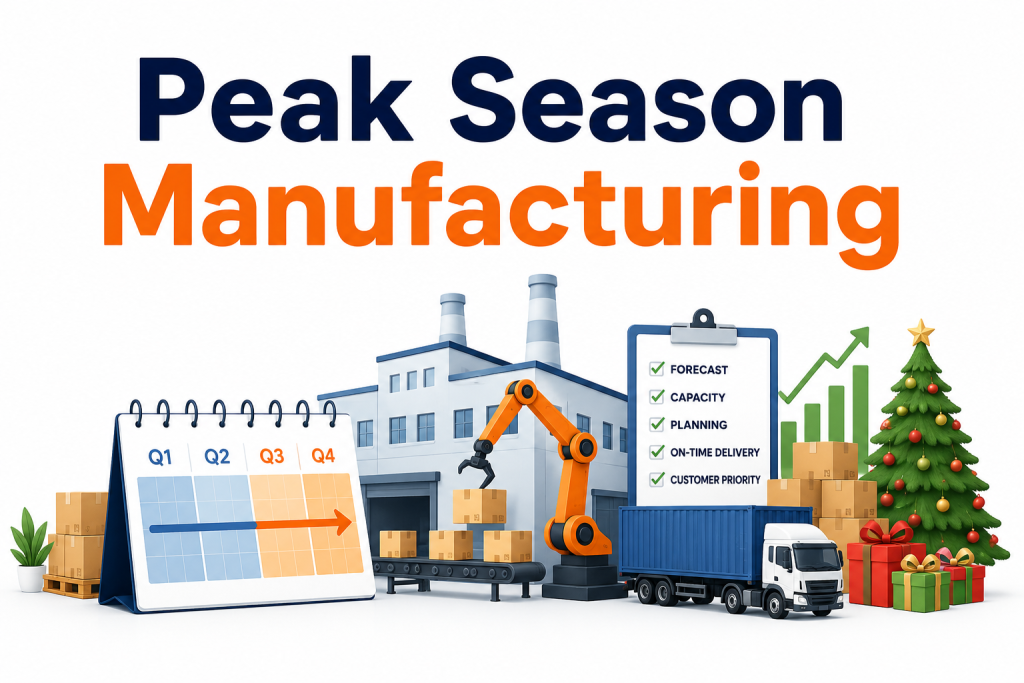
Many buyers place orders during Q1 or Q2 and hold inventory until peak selling seasons.
While this increases storage costs, it helps reduce supply chain risks.
Key Benefits
- Lower factory pricing during slower production periods
- Better product quality due to reduced factory pressure
- Lower freight costs and fewer shipping delays
Holding Cost vs. Supply Chain Risk
Producing early requires inventory storage and additional working capital.
However, waiting until peak season can lead to:
- Higher production costs
- Higher freight rates
- Limited factory capacity
- Delivery delays
- Lost sales opportunities
For many importers, securing inventory is more important than minimizing storage costs.
Best Products for Early Production
This strategy works best for products with predictable demand, such as:
- Christmas decorations
- Home and kitchen products
- Garden products
- Bedding
- Basic apparel
- Standard industrial components
Products with short life cycles, such as fast fashion or high-tech items, may carry higher inventory risk if produced too early.
Risks of Ordering Too Late During Peak Season Manufacturing
Many supply chain problems begin with late purchasing decisions.
When buyers wait too long, they often face multiple challenges.
These include:
- Limited factory capacity
- Longer production lead times
- Raw material shortages
- Higher manufacturing costs
- Shipping delays
- Missed sales opportunities
Furthermore, logistics networks become crowded during peak season.
Even if production finishes on time, shipping delays can still impact delivery schedules.
Therefore, late ordering increases risk across the entire supply chain.
How Buyers Can Prepare for Peak Season Manufacturing
Successful buyers start planning months before peak season begins.
To improve supply chain performance, buyers should:
- Develop realistic sales forecasts
- Share forecasts with suppliers early
- Review capacity requirements regularly
- Confirm production schedules in advance
- Monitor raw material lead times
- Communicate changes quickly
In addition, buyers should build strong relationships with key suppliers.
Long-term partnerships often receive better support during periods of high demand.
Peak Season Manufacturing in Vietnam
Vietnam continues to attract buyers from the United States, Europe, and other global markets.
As manufacturing demand grows, many Vietnamese factories experience capacity constraints during peak season.
Therefore, buyers sourcing from Vietnam should provide forecasts as early as possible.
This helps factories:
- Reserve production capacity
- Plan material purchases
- Manage labor resources
- Maintain delivery performance
Most importantly, early planning reduces supply chain uncertainty for both buyers and suppliers.
Conclusion
Peak season manufacturing creates significant pressure across the supply chain. Factory capacity becomes limited while demand rises rapidly.
As a result, factories must prioritize customers who provide visibility and commitment. Buyers with accurate forecasts often secure production capacity, maintain stable lead times, and reduce supply chain risks.
In contrast, buyers who wait until the last minute may face delays, higher costs, and missed sales opportunities.
The lesson is simple: capacity is reserved, not created. Therefore, buyers who forecast early are far more likely to succeed during peak season manufacturing.