For many global buyers, China is still the fastest place to develop a new product. The supply chain is mature, supplier networks are deep, and factories can move very quickly. As a result, many startups and brands still begin product development in China.
However, long-term manufacturing strategy has changed. Tariffs, geopolitical risks, and supply chain disruption now push buyers to reduce dependence on a single country. Therefore, many companies start product development in China first and later move part of their production to Vietnam or other countries in Southeast Asia.
Today, buyers no longer focus only on low cost. Instead, they want a balance between speed, stability, and long-term supply chain security.
Why China Is Still Strong for Fast Product Development
China still offers major advantages during the early product development stage. In many industries, factories can develop samples very quickly. In addition, suppliers for components, packaging, tooling, and materials are often located near each other.
Because of this ecosystem, brands can shorten development time significantly.
Key advantages include:
- Fast prototype development
- Strong supplier ecosystem
- Easy access to raw materials
- Large engineering teams
- Flexible customization
- Mature manufacturing infrastructure
Moreover, many factories already understand export requirements for the US and Europe. This experience helps buyers reduce development mistakes.
For startups, speed-to-market is extremely important. Therefore, China often becomes the first choice during the launch phase.
The Problem With Long-Term Dependence on China
Although China remains strong in development speed, many buyers now worry about long-term manufacturing risk.
Over the last few years, several issues have affected global supply chains:
- US tariffs on Chinese products
- Rising labor costs
- Political tension between China and Western countries
- Shipping disruption
- Supply chain concentration risk
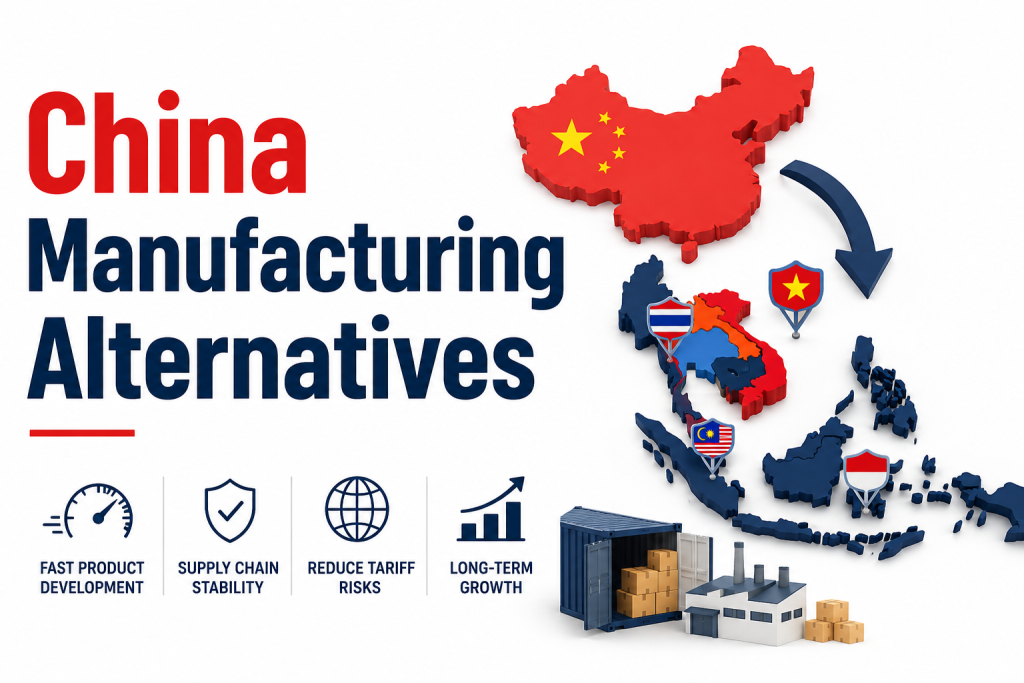
As a result, buyers started looking for China Manufacturing Alternatives.
Many companies learned an important lesson during COVID and global shipping disruption. If production depends on only one country, the entire business becomes vulnerable.
Therefore, diversification is no longer optional for many brands.
China Manufacturing Alternatives and Supply Chain Diversification
Today, many brands follow a “China Plus One” strategy. In this model, companies continue working with China while building manufacturing capacity in another country.
This approach gives buyers more flexibility.
Common China Manufacturing Alternatives include:
- Vietnam
- Thailand
- India
- Indonesia
- Mexico
Among these countries, Vietnam has gained strong attention from US buyers.
Vietnam offers several advantages:
- Competitive labor cost
- Strong export growth
- Trade agreement benefits
- Improving manufacturing capability
- Lower tariff exposure compared to China
In addition, many Chinese factories have already expanded into Vietnam. Because of this trend, buyers can maintain part of their existing supply chain while reducing geopolitical risk.
Why Many Brands Start in China First
In reality, many products are still easier to develop in China during the early stage.
For example, a startup may need:
- Fast prototyping
- Small MOQ
- Multiple design revisions
- Rapid engineering changes
China usually handles these requirements better than emerging manufacturing markets.
However, after the product becomes stable, priorities often change.
At this stage, buyers focus more on:
- Stable production
- Cost control
- Tariff management
- Long-term supplier reliability
- Supply chain resilience
Therefore, many brands move part of production outside China after validating the product in the market.
This strategy helps companies reduce risk while maintaining product quality.
China Manufacturing Alternatives for Long-Term Stability
Long-term manufacturing stability requires more than low pricing. Buyers also need predictable operations and stable supply chains.
A strong manufacturing strategy should include:
- Multiple supplier options
- Backup production capacity
- Geographic diversification
- Stable logistics routes
- Lower geopolitical exposure
Because of this, many brands now separate product development from mass production strategy.
For example:
- Product development in China
- Mass production in Vietnam
- Secondary sourcing in Thailand or India
This model becomes more common every year.
Moreover, investors and retailers also prefer stable supply chains. Therefore, diversification can support business growth and improve customer confidence.
The Challenge of Moving Manufacturing Outside China
Although diversification sounds simple, the transition process is not always easy.
Many buyers underestimate the differences between China and newer manufacturing markets.
Some common challenges include:
- Smaller supplier ecosystems
- Slower development speed
- Higher MOQ requirements
- Limited engineering support
- Raw material dependency on China
As a result, buyers should not expect immediate replacement.
Instead, companies should build diversification gradually.
A practical strategy often includes:
- Develop products in China
- Validate market demand
- Standardize product specifications
- Transfer stable production to alternative markets
- Maintain dual sourcing when possible
This approach reduces operational risk and avoids sudden disruption.
How Smart Buyers Balance Speed and Stability
Successful buyers understand that speed and stability are both important.
China still provides major advantages in:
- Product development
- Engineering
- Speed-to-market
- Complex manufacturing
However, China Manufacturing Alternatives help companies build stronger long-term operations.
Therefore, smart buyers focus on balance instead of complete replacement.
In many cases, the best strategy is not “leave China completely.” Instead, the goal is to reduce dependency and improve flexibility.
This mindset allows brands to:
- Launch products faster
- Reduce tariff exposure
- Protect long-term supply chains
- Improve sourcing flexibility
- Support future business growth
As global supply chains continue changing, diversification will remain an important strategy for international buyers.
Conclusion
China remains one of the strongest manufacturing ecosystems in the world. For fast product development, very few countries can match its speed and supplier network.
However, long-term manufacturing strategy now requires more balance. Tariffs, geopolitical risks, and supply chain disruption continue pushing buyers to diversify production.
Because of this shift, many companies now combine China’s development strength with manufacturing alternatives such as Vietnam and Southeast Asia.
In the future, successful brands will not focus only on cost. Instead, they will build supply chains that support speed, flexibility, and long-term stability together.