Powder Metallurgy Vietnam

Powder Metallurgy vs Casting: Key Differences, Cost & When to Choose Each

Introduction Choosing the right manufacturing process is important. It affects cost, quality, and supply chain speed. In many cases, buyers compare powder metallurgy and casting. Both methods are common. However, they serve different needs. In Vietnam, casting is widely available. Meanwhile, powder metallurgy Vietnam is still limited. Therefore, understanding both helps you make better sourcing decisions. What Is Powder Metallurgy Vietnam? Powder metallurgy is a process using metal powder. First, factories press powder into shape. Read more

Geopolitical Supply Chains: How Globalization 2.0 Is Reshaping Manufacturing in 2026

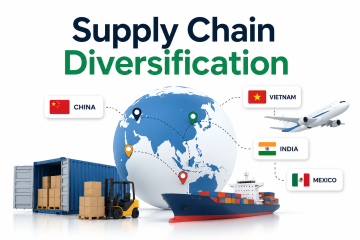
For decades, companies built supply chains for cost. They chose the cheapest country. They scaled production fast. However, that model is changing. In 2026, supply chains are no longer just about cost. Instead, they are shaped by geopolitics, risk, and control. This shift marks a new phase: Globalization 2.0. More importantly, this is not a short-term business trend. It is a long-term geopolitical shift that may last for decades. What Are Geopolitical Supply Chains? Geopolitical Read more

Geopolitical Supply Chains
global supply chain chokepoints

5 Global Supply Chain Chokepoints That Shape Trade Between Asia, Southeast Asia, and the US

Introduction Global trade depends on a few narrow sea routes. These routes are often called global supply chain chokepoints. Many ships must pass through them every day. When one chokepoint faces disruption, shipping costs rise quickly. As a result, supply chains feel pressure across many industries. Manufacturing, energy, and raw materials all depend on these routes. Five locations play a major role in global trade: Each chokepoint connects major manufacturing regions with large consumer markets. Read more

US Trade Concerns About Vietnam Manufacturing: Market Access, Currency, and Overcapacity

Introduction Vietnam has become a major manufacturing hub in Asia. As a result, exports to the United States have increased quickly. However, this growth also raises Vietnam manufacturing trade concerns in US trade policy discussions. In particular, US reports often mention market access, state-owned enterprises, and currency policy. Therefore, companies that source from Vietnam should understand these issues. Moreover, investors and buyers should know how these concerns may affect global supply chains. This article explains Read more

Vietnam manufacturing trade concerns
forced labor supply chain investigation

Forced Labor Supply Chain Investigation: Key Manufacturing Countries Exporting to the US

The United States has launched investigations into about 60 economies. The goal is to check whether these countries enforce bans on goods made with forced labor. This move has raised concern across global supply chains. Many countries export large volumes of manufacturing goods to the US. Therefore, buyers want to know whether these supply chains follow labor rules. Several major manufacturing countries are now under close review. These countries include China, Vietnam, Thailand, India, and Read more

Polypropylene Fabric Manufacturing in Vietnam: Woven vs Nonwoven Technologies

Vietnam has developed into a strong manufacturing base for polypropylene fabric. Today, many factories produce both PP woven fabric and PP nonwoven fabric. As a result, these materials support industries such as packaging, construction, hygiene, and industrial manufacturing. Generally, polypropylene fabric falls into two main categories. To start with, there is PP woven fabric, which uses a traditional weaving process. After that, there is PP nonwoven fabric, which forms fabric without weaving. Both technologies operate Read more

Polypropylene fabric Vietnam
materials impacted by oil and gas prices

How Oil and Gas Prices Impact Key Manufacturing Materials

Oil and gas prices affect much more than fuel or logistics. In fact, they influence many industrial materials used in manufacturing. When oil or gas prices rise, energy costs increase. As a result, factories must spend more to produce materials. At the same time, petrochemical feedstock also becomes more expensive. Therefore, many raw materials experience price changes during energy market volatility. In recent years, geopolitical tensions in the Middle East have increased uncertainty. For example, Read more

How to Reduce Manufacturing Costs When Energy and Oil Prices Fluctuate

Introduction Professional procurement does not focus only on unit price. Instead, it focuses on Total Cost of Ownership (TCO). TCO includes raw materials, logistics, inventory, risk, and payment terms. Therefore, buyers must look at the whole supply chain when they want to reduce manufacturing cost. Energy and oil prices can change quickly. As a result, many factories face unstable production costs. Raw materials, plastics, transportation, and electricity may all become more expensive. However, companies can Read more

reduce manufacturing cost
Vietnam machined parts

Vietnam Machined Parts: A Practical Guide for Global Buyers

Introduction to Vietnam Machined Parts Vietnam machined parts support many manufacturing industries. These parts are often used inside larger products. For example, CNC parts may be: components inside a semi-finished product, prototype parts for product testing or finished parts used in production Therefore, machining plays an important role in modern manufacturing supply chains. As global buyers diversify supply chains, Vietnam becomes an attractive machining destination. The country offers skilled machinists, competitive costs, and growing manufacturing Read more

Trump Tariffs Supply Chain Strategy: Why US Buyers Are Sourcing Outside China

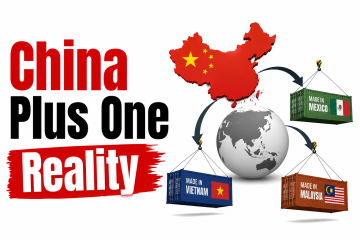
Many people believe the main goal of Trump tariffs was to reduce the US trade deficit. However, the real objective goes deeper than trade numbers. In reality, tariffs became a tool to reshape global supply chains. Therefore, companies around the world started to rethink their sourcing strategy. Today, buyers focus on supply chain stability. As a result, sourcing decisions now consider risk, diversification, and long-term planning. Trade Deficit Was Only the Surface The US trade Read more

Trump Tariffs Supply Chain Strategy