how to calculate import tariff from Vietnam

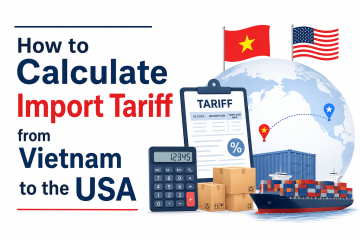
How to Calculate Import Tariff from Vietnam to the USA

Many buyers are moving production from China to Vietnam. However, many importers still do not understand how U.S. import tariffs work. In most cases, buyers only check the base duty rate. However, the real tariff can be much higher because of trade programs, anti-dumping cases, or transshipment risks. Therefore, before placing orders in Vietnam, buyers should understand the full tariff structure. In general, import duty can be estimated like this: However, there are several layers Read more

Vietnam Factory Audit: What Buyers Miss Beyond ISO and Product Certifications

Introduction When buyers source from Vietnam, they often focus on ISO and product certifications. However, a full Vietnam factory audit should go beyond that. Many risks sit outside quality systems. Therefore, buyers need a broader view before placing orders. Vietnam Factory Audit: What Most Buyers Check First Most buyers start with standard checks. These are important. Yet, they are not enough. These certifications show capability. However, they do not cover all risks. However, What Buyers Read more

Vietnam factory audit
Golf Manufacturing in Vietnam

Golf Manufacturing in Vietnam: A Complete Guide to Local Supply Chains

Introduction Vietnam is becoming a key hub for golf production. In recent years, many global brands have shifted sourcing to Vietnam. As a result, the local supply chain has grown fast. Today, Vietnam can support a nearly complete, 100% made-in-Vietnam ecosystem for golf products and accessories. Moreover, large brands and retailers are already producing here. Therefore, the golf industry in Vietnam is becoming more complete and competitive. This guide explains what Vietnam can do, where Read more

Deep Drawing vs. Hydroforming: Which Metal Forming Process Is Right for Your Product?

Introduction Choosing the right metal forming process is important. It affects cost, lead time, and product design. Many buyers compare deep drawing and hydroforming. However, they are very different in practice. In this guide, you will learn the key differences. More importantly, you will know when to use each process. What Is Deep Drawing? Deep drawing is a common metal forming method. A metal sheet is pressed into a die to create a shape. It Read more

Hydroforming Vietnam
Powder Metallurgy Vietnam

Powder Metallurgy vs Casting: Key Differences, Cost & When to Choose Each

Introduction Choosing the right manufacturing process is important. It affects cost, quality, and supply chain speed. In many cases, buyers compare powder metallurgy and casting. Both methods are common. However, they serve different needs. In Vietnam, casting is widely available. Meanwhile, powder metallurgy Vietnam is still limited. Therefore, understanding both helps you make better sourcing decisions. What Is Powder Metallurgy Vietnam? Powder metallurgy is a process using metal powder. First, factories press powder into shape. Read more

Geopolitical Supply Chains: How Globalization 2.0 Is Reshaping Manufacturing in 2026

For decades, companies built supply chains for cost. They chose the cheapest country. They scaled production fast. However, that model is changing. In 2026, supply chains are no longer just about cost. Instead, they are shaped by geopolitics, risk, and control. This shift marks a new phase: Globalization 2.0. More importantly, this is not a short-term business trend. It is a long-term geopolitical shift that may last for decades. What Are Geopolitical Supply Chains? Geopolitical Read more

Geopolitical Supply Chains
global supply chain chokepoints

5 Global Supply Chain Chokepoints That Shape Trade Between Asia, Southeast Asia, and the US

Introduction Global trade depends on a few narrow sea routes. These routes are often called global supply chain chokepoints. Many ships must pass through them every day. When one chokepoint faces disruption, shipping costs rise quickly. As a result, supply chains feel pressure across many industries. Manufacturing, energy, and raw materials all depend on these routes. Five locations play a major role in global trade: Each chokepoint connects major manufacturing regions with large consumer markets. Read more